
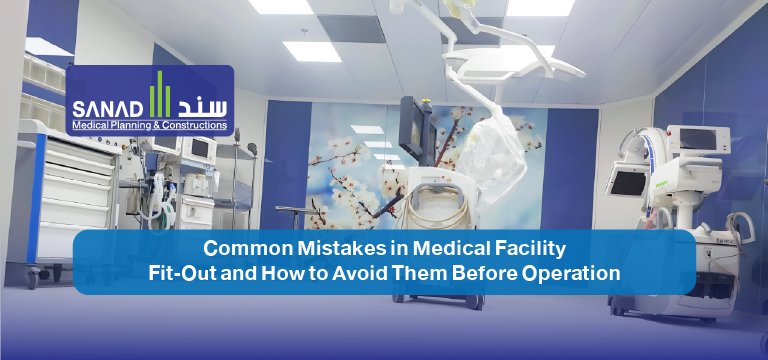
Equipping medical facilities is a critical phase in the lifecycle of any health project. Success is not measured merely by the completion of construction or the official opening; it fundamentally depends on operational efficiency, patient safety, and the long-term sustainability of medical systems. In this regard, “Sanad Medical” stands out as a leading strategic partner with the necessary expertise to guide investors and health entities toward the best medical equipping practices. The company consistently strives to provide integrated engineering solutions that ensure the avoidance of technical and operational gaps that might hinder the health facility’s progress.
Despite this, many health projects fall into repetitive mistakes during the equipping phase. These errors often surface after operations begin, leading to service disruptions, high costs, or non-compliance with the requirements of relevant authorities within the Kingdom of Saudi Arabia.
Before diving into the details of these mistakes, it is essential to note that understanding the general framework of Medical Contracting and its specialized requirements is a fundamental step toward avoiding most of these issues. This was covered in detail in our previous article, “What is Medical Contracting and its role in constructing and equipping hospitals and medical centers in Saudi Arabia.”
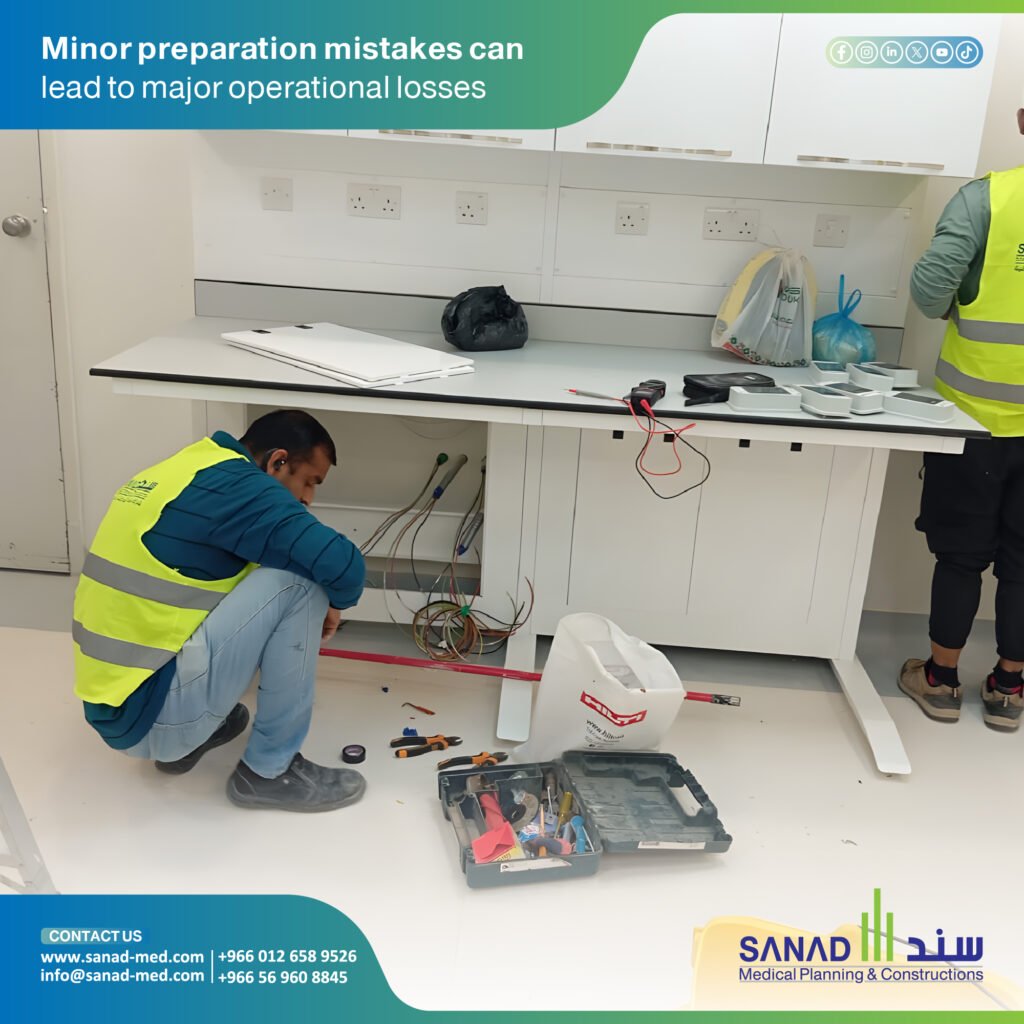
First: Treating a Medical Project with a General Contracting Mindset
One of the most common mistakes is executing medical facilities using the same approach followed in traditional construction projects, without realizing that a hospital or medical center is not just a building, but a complex operational system.
Health facilities require:
- Precise integration between design and execution.
- Consideration for medical traffic flows.
- High-level coordination between engineering and medical systems.
How to Avoid This Mistake?
Work with a specialized medical contractor who has actual experience in executing healthcare projects and understands the requirements of the Saudi Ministry of Health (MOH), as well as CBAHI and JCI standards, right from the early stages of planning.
Second: Weak Pre-operational Planning
Focusing on finishing the project without keeping operations in mind leads to fundamental errors, such as:
- Poor space distribution.
- Conflict between patient pathways and medical staff flows.
- Difficulty in maintaining systems after the launch.
How to Avoid This Mistake?
The design and equipping must be based on a clear Operational Workflow that takes into account:
- Number of users.
- Nature of medical services.
- Pressure and emergency scenarios.
This approach is followed by specialized medical contracting companies like Sanad Medical, where the project is treated as an integrated operational unit rather than just an engineering execution.
Third: Errors in the Design and Execution of Sensitive Departments
Sensitive medical departments are most prone to errors due to the complexity of their systems and special requirements, including:
- Operation Rooms (OR).
- Intensive Care Units (ICU).
- Isolation Rooms.
- Radiology Rooms (X-Ray).
Prominent mistakes in these departments include:
- Poor distribution of medical gas points.
- Weak medical ventilation systems.
- Non-compliance with insulation and differential pressure requirements.
How to Avoid This Mistake?
Adhere to approved medical and engineering standards and work with a team experienced in executing these departments according to international codes and the requirements of regulatory bodies in Saudi Arabia.
Fourth: Neglecting the Integration of Medical and Engineering Systems
Many projects suffer from a lack of coordination between different systems, leading to negative outcomes. Systems that require coordination include:
- Medical Gas Systems.
- HVAC (Heating, Ventilation, and Air Conditioning) systems.
- Electrical, alarm, and safety systems.
This imbalance leads to:
- Conflicts in piping and wiring installations.
- Difficulty in maintenance.
- Future operational risks.
How to Avoid This Mistake?
Ensure the presence of a specialized Technical Office that oversees the coordination between all systems, ensuring they are implemented integrally from the design phase through to final handover.
Fifth: Relying on Uncertified Suppliers or Non-Compliant Products
Choosing medical equipment or systems without verifying quality certificates or compliance with Saudi specifications and relevant authorities leads to the facility being rejected during licensing or the need for re-execution at additional costs.
How to Avoid This Mistake?
Deal with companies that have a network of certified suppliers and are committed to providing products that comply with ISO standards and the requirements of the Saudi Ministry of Health.
Sixth: Lack of Attention to Safety and Fire Protection Systems
Safety systems are not a complementary element; they are an essential condition for the accreditation and operation of health facilities.
Common mistakes include:
- Implementing systems not designed for medical environments.
- Lack of coordination with relevant authorities.
- Ignoring training and trial operation.
How to Avoid This Mistake?
Design and implement safety and fire protection systems according to the Saudi Building Code (SBC), linking them to the nature of the medical operation of the site.
Seventh: Ignoring Maintenance and Technical Support After Handover
Many projects focus solely on handover without a clear plan for:
- Periodic maintenance.
- Technical support.
- Improving system efficiency.
How to Avoid This Mistake?
Choose a partner that provides long-term solutions including operation, maintenance, and technical support, rather than just project execution.
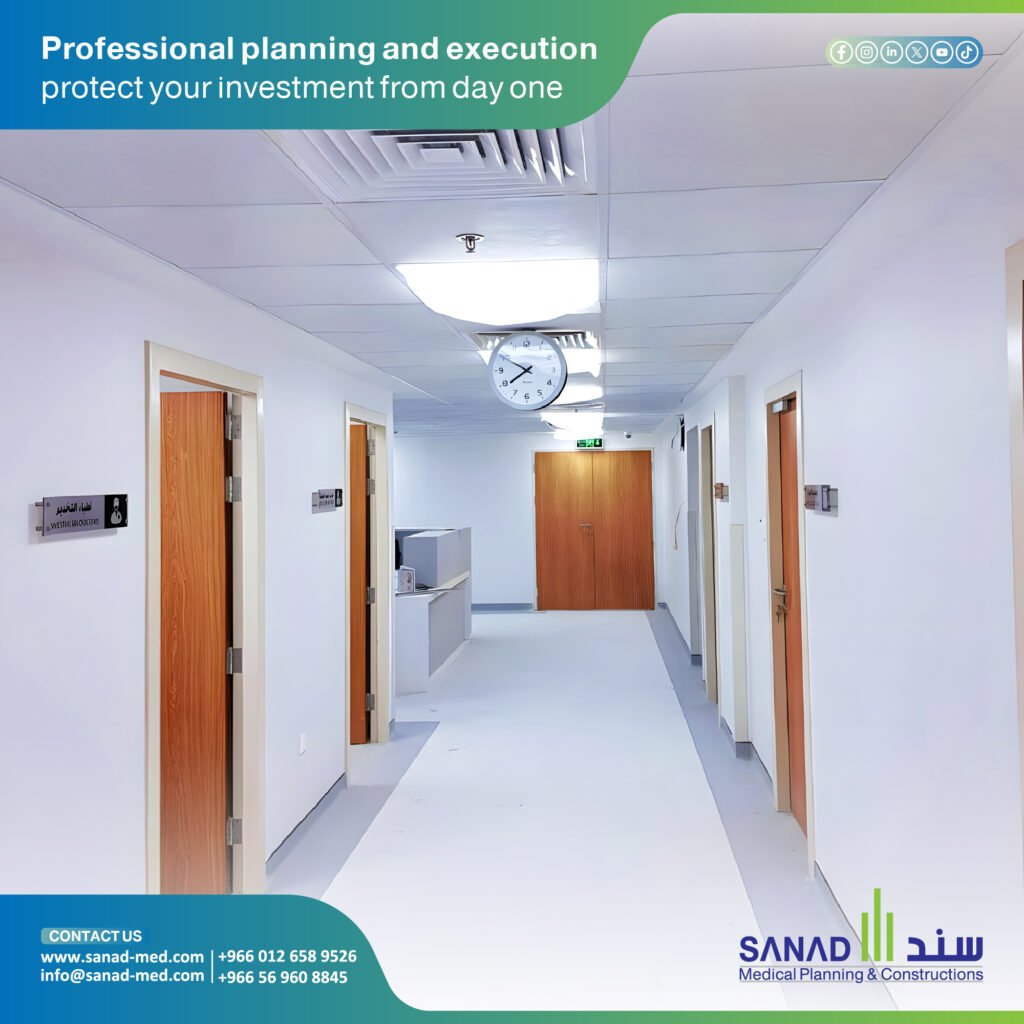
The Relationship Between Understanding Medical Contracting and Avoiding Mistakes
Practical experience shows that most mistakes in equipping medical facilities stem from a lack of full understanding of the nature of medical contracting and its specialized requirements. The more the project owner or medical investor is aware of the foundations of this field, the greater their ability to make correct decisions and avoid future operational risks.
Therefore, understanding the concept of Medical Contracting is not a separate stage, but the foundation upon which the success of a health project is built from the start.
Conclusion
Equipping medical facilities is a precise process that leaves no room for improvisation or temporary solutions. Avoiding common mistakes begins with proper planning, choosing a specialized partner, adhering to standards, and thinking about operation before execution.
This is how healthcare projects are managed professionally, an approach relied upon by Sanad Medical in executing and developing health facilities within the Kingdom of Saudi Arabia, ensuring true quality and operational sustainability.