
Introduction: The Healthcare Revolution Under Vision 2030
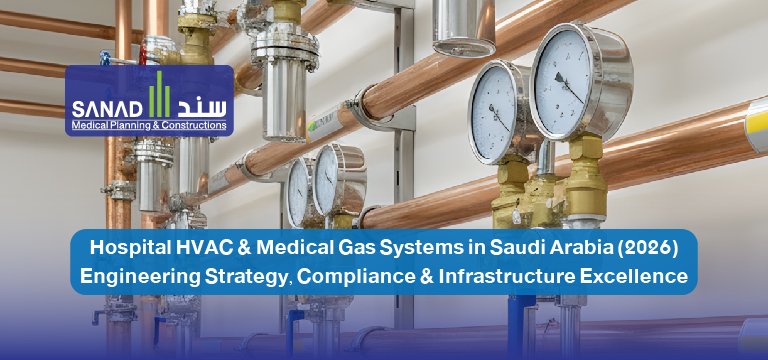
By 2026, the healthcare sector in the Kingdom of Saudi Arabia has achieved unprecedented milestones in engineering and digital transformation as part of Vision 2030. Modern hospital construction is no longer just about architectural aesthetics; the real challenge lies in “Smart Infrastructure” that ensures patient safety and operational efficiency. At the heart of this complex ecosystem are Heating, Ventilation, and Air Conditioning (HVAC) and Medical Gas Pipeline Systems (MGPS).
Sanad Medical stands at the forefront of this evolution, serving not only as a specialized contractor but as a strategic partner and the authorized agent for world-class brands like Tonoli (Italy). Understanding the engineering strategy behind these systems is the key to securing a sustainable and safe medical facility.
I. HVAC Engineering Strategy and Infection Control in 2026
In the ultra-modern hospitals of Riyadh, Jeddah, and NEOM, HVAC systems are no longer merely for cooling; they are the primary line of defense against Hospital-Acquired Infections (HAIs) and pandemics.
1. Indoor Air Quality (IAQ) and HEPA Filtration
Medical HVAC engineering in 2026 relies on advanced filtration technologies. High-Efficiency Particulate Air (HEPA) filters are mandatory, ensuring the elimination of fine particles with an efficiency of 99.97%. Engineers at Sanad Medical focus heavily on calculating Air Changes per Hour (ACH). Modern operating theaters require at least 20 to 25air changes to ensure a sterile environment free from airborne bacteria.
2. Pressure Differential Management
The engineering strategy follows the “Pressure Gradient” principle. Critical areas like Operating Rooms (ORs) and sensitive labs are designed with Positive Pressure to prevent contaminated air from corridors from entering. Conversely, isolation rooms are designed with Negative Pressure to ensure that infectious air is contained and treated before being exhausted. This delicate balance requires intelligent sensors integrated with the Building Management System (BMS).
3. Saudi Climate Challenges and Energy Efficiency
Due to the Kingdom’s high ambient temperatures, HVAC systems are engineered for maximum performance with minimum energy consumption. Sanad Medical implements Air Handling Units (AHUs) equipped with energy recovery systems, significantly reducing thermal loads in alignment with Saudi Arabia’s 2026 green initiatives.
II. Medical Gas Pipeline Systems (MGPS) – The Lifeline of Healthcare
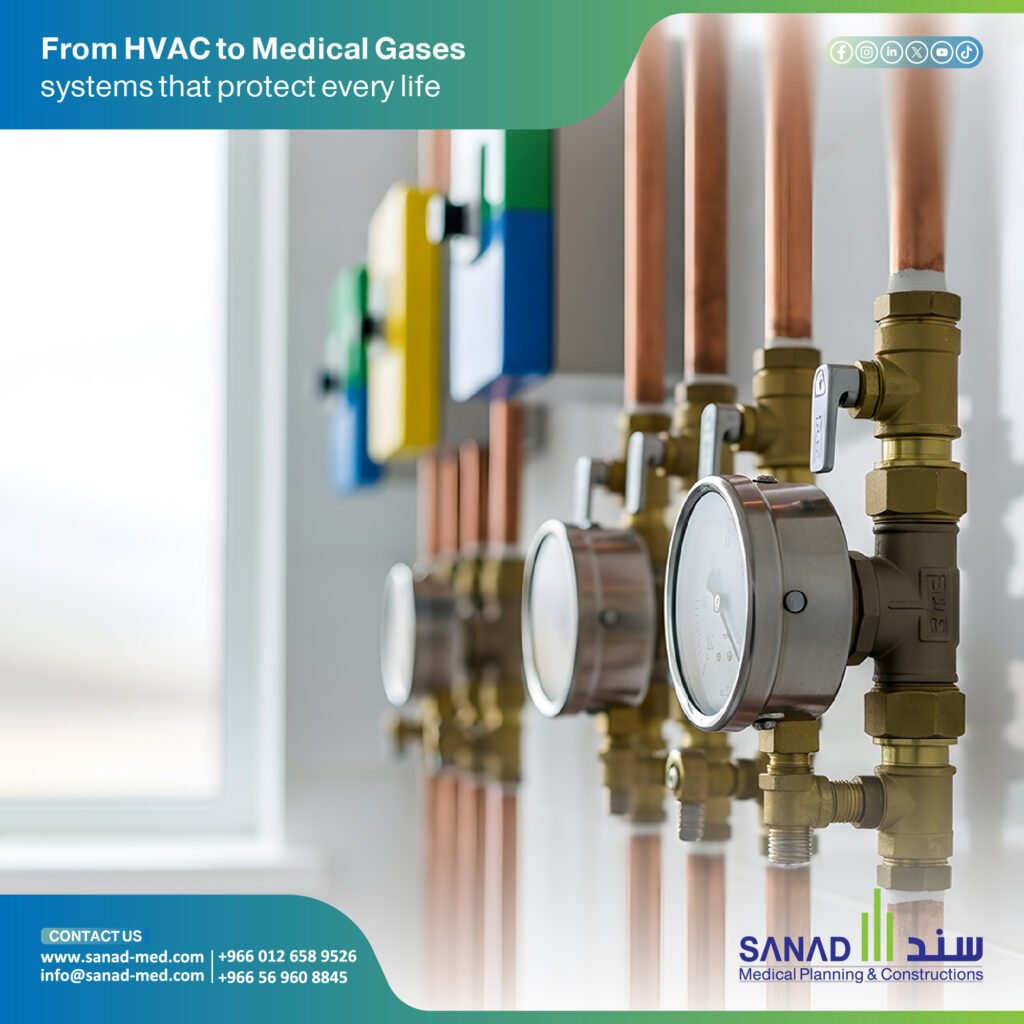
The MGPS is the most sensitive system in any hospital, distributing life-saving gases such as Oxygen (O_2), Medical Air, Nitrous Oxide (N_2O), and Vacuum systems.
1. Tonoli Copper Pipes: The Gold Standard for Quality
As the authorized agent for Tonoli (Italy) in Saudi Arabia, Sanad Medical emphasizes that the quality of copper is a life-or-death decision. Tonoli pipes, manufactured according to the EN 13348 standard, feature ultimate chemical purity with copper content of Cu %99.9.
Most importantly, these pipes are chemically treated to be completely Degreased. This is vital because any oil residue inside oxygen pipes can lead to catastrophic explosions when in contact with high-pressure oxygen.
2. Central Supply Stations and Smart Alarms
Engineering strategies in 2026 include triple-level redundancy supply stations—ranging from bulk liquid oxygen tanks to reserve cylinder manifolds. Smart local and central alarm units monitor gas pressures in real-time, sending instant alerts to medical and engineering staff via mobile applications linked to the hospital’s network.
III. Regulatory Compliance (CBAHI & NFPA 99)
No hospital in Saudi Arabia can obtain a final operating license without strict adherence to regulatory standards.
1. Saudi Central Board for Accreditation of Healthcare Institutions (CBAHI)
CBAHI focuses on infrastructure quality and service continuity. Sanad Medical acts as a technical consultant for its clients, ensuring that all HVAC and MGPS installations pass CBAHI’s rigorous checklists, from material quality to periodic maintenance logs.
2. National Fire Protection Association (NFPA 99)
The NFPA 99 code is the primary reference for medical gas systems in Saudi Arabia. This code dictates pipe thickness, brazing methods using Nitrogen Purging (to prevent carbon oxidation inside the tubes), and 24-hour pressure tests to ensure zero leakage.
IV. Technical Integration and Building Information Modeling (BIM)
In 2026, the era of 2D paper drawings has ended. Sanad Medical utilizes BIM – Level 3 for all its projects. This allows for the creation of a “Digital Twin” of the hospital before construction begins.
This integration solves “system congestion” in false ceilings. Large HVAC ducts, medical copper pipes, and electrical trays are coordinated with millimeter precision, reducing material waste and significantly accelerating project timelines.
V. Excellence in Execution with Sanad Medical
Excellence is a daily practice at Sanad Medical. The company follows a rigorous methodology:
- Material Selection: Direct procurement of original Tonoli pipes to ensure purity.
- Technical Expertise: Certified technicians in medical grade brazing with periodic testing of weld samples.
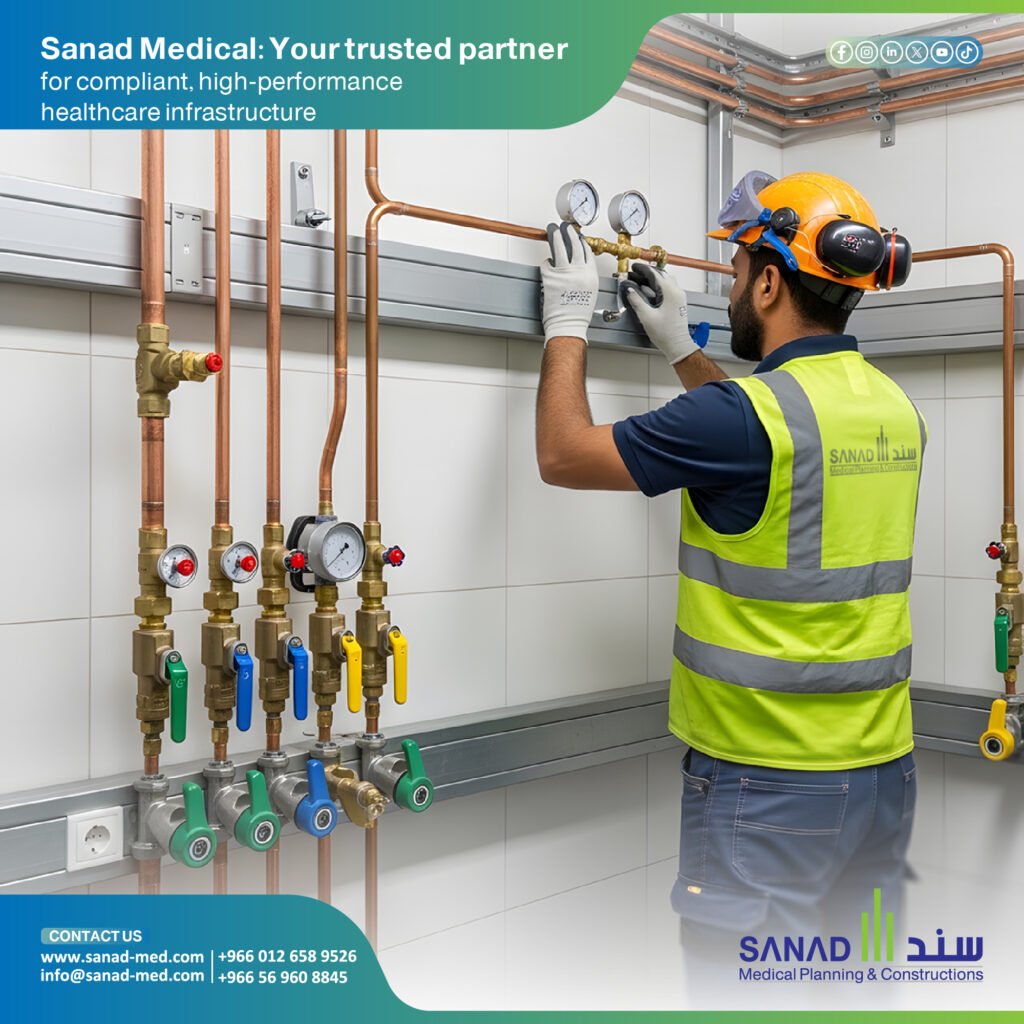
- Testing & Commissioning: Utilizing digital gas analyzers to ensure that the oxygen reaching the patient’s bedside is 100% pure and free of particulate contaminants.
VI. The Future of Smart Hospitals in Saudi Arabia
In 2026, we are witnessing a new generation of AI-driven hospitals. HVAC and MGPS systems have become “Smart,” where the system can predict a fan failure or a drop in oxygen stock before the problem occurs. Sanad Medical is investing heavily in these technologies to keep Saudi hospitals at the global forefront of medical facility management.
Frequently Asked Questions (FAQ)
1. Why are Tonoli pipes essential for medical gas systems?
Tonoli pipes are internationally certified Italian pipes that are completely degreased and compliant with EN 13348. This ensures the safe transport of medical gases without the risk of chemical reactions or explosions.
2. What is the role of Sanad Medical in healthcare projects?
The company provides integrated solutions including engineering design, procurement of original equipment and pipes, execution, installation, and final testing to ensure compliance with CBAHI and MOH standards.
3. How does HVAC affect infection control in a hospital?
By controlling air paths, using HEPA filters, and implementing positive/negative pressure systems, the HVAC system prevents the airborne spread of viruses and bacteria between isolation rooms, labs, and the rest of the hospital.
4. What international standards does Saudi Arabia follow for MGPS?
The Kingdom primarily follows the American NFPA 99 code and British HTM 02-01 standards, in addition to Saudi Ministry of Health (MOH) requirements and CBAHI accreditation.
5. Are Tonoli pipes available in all Saudi cities?
Yes, through Sanad Medical, the authorized agent, Tonoli pipes are supplied and distributed in Riyadh, Jeddah, Dammam, and all major projects across the Kingdom.
Building a robust medical infrastructure starts with choosing the right engineering partner. Whether you are in the initial design phase of a new hospital or looking to upgrade existing systems to meet 2026 standards, the engineering team at Sanad Medical is ready to provide full technical support.
As the authorized agent for world-leading Tonoli pipes, we guarantee the material quality and execution precision required for the Saudi Vision 2030.
📩 Contact us today for a technical consultation or a customized project quote:
- Email: info@sanad-med.com
- Phone / WhatsApp: https://wa.me/966569608845
Sanad Medical.. Anchoring Safety Standards for the Future of Health.