
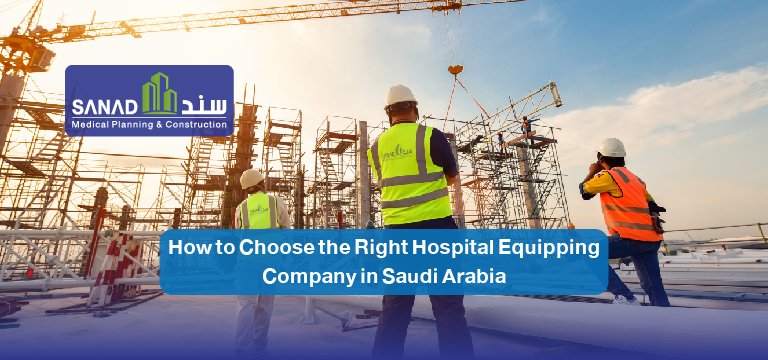
Selecting a hospital outfitting company is one of the most critical decisions influencing the ultimate success and sustainability of a healthcare investment — far outweighing factors like geographic location or clinical specialization. Partnering with an unqualified contractor can transform a promising project into an ongoing cycle of financial overruns, project delays, and regulatory compliance failures. Conversely, the right specialized engineering partner turns a complex turnkey process — from preliminary floor plans to official commissioning and clinical inauguration — into a structured, seamless execution pathway.
Executing a healthcare outfitting project demands strict coordination among mechanical, electrical, architectural, and specialized medical systems installation and testing. To ensure this complex architecture forms a safe and compliant healing environment, Sanad Medical stands out as the trusted engineering and outfitting partner dedicated to advancing healthcare facilities across the Kingdom of Saudi Arabia in accordance with top architectural and medical standards.
In this comprehensive guide, Sanad Medical establishes the objective criteria for evaluating and selecting a hospital outfitting firm, equipping investors, healthcare executives, and project leaders with actionable insights to safeguard their investment and secure full regulatory readiness.
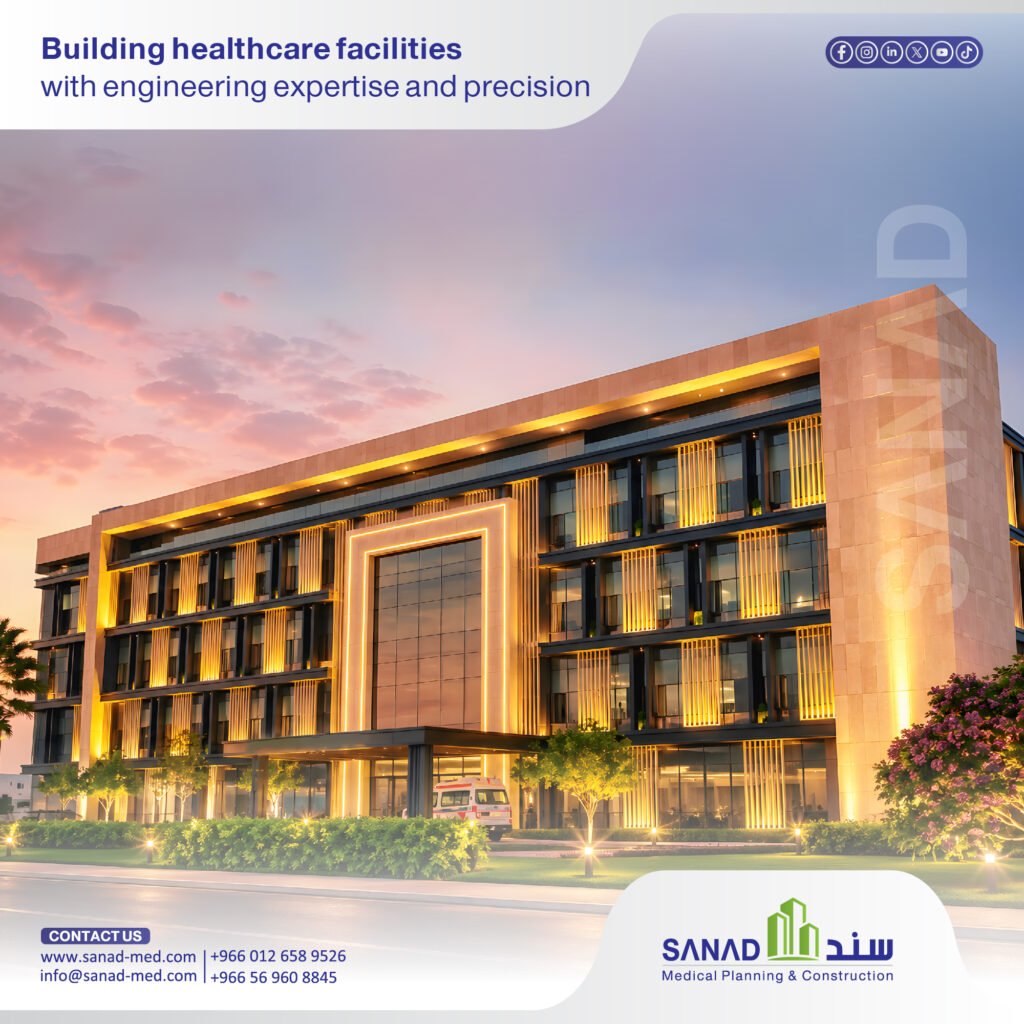
First: The Fundamental Difference Between General Contractors and Specialized Medical Outfitting Companies
The most critical mistake made during healthcare project planning is treating medical facility outfitting as a conventional construction project awarded to a general building contractor based solely on lower initial bids.
Healthcare facilities demand highly intricate engineering specializations that can only be acquired through dedicated, repeated clinical experience:
- Clinical Flow Architecture: Strict physical separation between patient pathways, medical personnel routes, sterile supplies, and biohazardous waste to prevent cross-contamination from the initial blueprint phase.
- Specialized Healthcare HVAC Systems: Rigorous application of differential pressure regimes, air exchange rates, and High-Efficiency Particulate Air (HEPA) filtration standards that drastically differ from commercial air conditioning setups.
- Radiation Shielding and Protection: Designing lead shielding and structural protection based on verified radiological physics calculations rather than rough approximations.
- Central Medical Gas Pipeline Systems (MGPS): Installing and commissioning medical gas networks as life-support equipment subject to specialized design and safety standards distinct from traditional plumbing.
Interlocking these specialized disciplines requires an expert engineering partner who understands their operational dependencies, ensuring complete facility safety and alignment with national health transformation goals.
Second: Seven Essential Criteria for Selecting a Hospital Outfitting Firm in KSA
Evaluating prospective medical outfitting partners requires applying seven strict engineering and regulatory benchmarks:
1. Proven Track Record in Completed and Licensed Medical Projects
The primary indicator of capability is a firm’s portfolio: Has the company executed similar healthcare projects within the Kingdom of Saudi Arabia? Have those facilities successfully passed inspection and secured operational licenses? A documented history of completed, fully compliant projects provides the strongest proof of technical execution.
2. In-House Multi-Disciplinary Engineering Capabilities
A clinical outfitting project demands seamless collaboration across multiple engineering disciplines to eliminate design conflicts:
- Medical Architect: To structure clinical spatial planning, zoning, cleanroom boundaries, and traffic flows.
- Medical Gas & Mechanical HVAC Engineer: To design medical gas pipelines, differential pressures, and specialized cooling loads.
- Medical Electrical Engineer: To design isolated power supply systems (IPS) and ungrounded electrical safety networks.
- Certified Radiation Protection Expert: To calculate exact lead equivalence and structural shielding requirements for radiology suites.
Maintaining these specialized engineers in-house minimizes implementation errors, accelerates timelines, and ensures single-point accountability, unlike firms relying entirely on subcontracted third parties.
3. Deep Understanding of Saudi Regulatory Frameworks
Healthcare projects in Saudi Arabia must navigate a multi-agency regulatory landscape, including the Ministry of Health (MOH), the Saudi Food and Drug Authority (SFDA), the National Center for Radiation Protection (NRRC), the Saudi Central Board for Accreditation of Healthcare Institutions (CBAHI), Civil Defense, and municipal authorities.
An intimate grasp of these regulatory requirements ensures that licensing documentation is correctly assembled from the start. This allows facilities to clear physical site inspections and secure operational permits without costly structural retrofits. Furthermore, designing to CBAHI standards ensures long-term institutional quality and accreditation readiness.
4. Professional Project Management and Schedule Adherence
Employing structured project management methodologies guarantees that outfitting works remain within budget and on schedule. Strict timeline adherence prevents daily operational revenue losses and contractual delay penalties.
5. Financial Transparency and Detailed Bill of Quantities
The lowest initial bid is rarely the most cost-effective option. Unusually low quotes frequently hide omitted line items that resurface as expensive change orders mid-project. Detailed proposals should clearly state whether radiation studies, network pressure testing, regulatory coordination, and technical training are fully included.
6. Technical Compliance of Materials and Systems
Reputable outfitting firms specify medical-grade materials that comply with international healthcare standards. This includes seamless medical-grade copper piping for gas lines, high-efficiency air filters for operating rooms, and antimicrobial, heat-welded medical vinyl flooring.
7. Post-Handover Technical Support and Maintenance
Medical infrastructure requires continuous calibration, testing, and preventive maintenance. Choosing a partner that provides ongoing technical support and maintenance agreements ensures long-term system reliability and operational continuity.
Third: Comparing Turnkey Medical Partners vs. General Subcontracting
The following matrix highlights the operational differences between partnering with an integrated medical outfitting firm versus relying on general contractors:
| Evaluation Criteria | Integrated Medical Partner (Turnkey) | General Contractor / Subcontracted Approach |
| Regulatory Knowledge | Up-to-date expertise in MOH and CBAHI requirements | Limited or reliant on generalized construction codes |
| Interdisciplinary Coordination | Direct internal coordination preventing design conflicts | Frequent friction and conflicts between sub-contractors |
| Licensing Accountability | Full accountability for final inspection and licensing | Dispersed responsibility; contractor exempts self from licensing |
| Material Quality Assurance | Medical-grade materials compliant with SFDA standards | Commercial-grade materials prone to inspection rejection |
| Schedule & Cost Control | Transparent pricing with strict project milestone tracking | Frequent scope changes, budget overruns, and delays |
Fourth: Critical Questions to Ask Before Signing an Outfitting Contract
To ensure proper governance, project leaders should present the following checklist to prospective outfitting companies prior to contract execution:
- Can you provide a verified list of licensed medical projects completed in Saudi Arabia for site visits?
- Does your permanent internal team include medical architects, gas pipeline engineers, and radiation shielding specialists?
- What is your established workflow for coordinating inspection files with the Ministry of Health and regulatory bodies?
- Do your technical proposals cover final system validation, pressure testing, and air balancing prior to handover?
- What ongoing technical support and preventive maintenance services are included post-handover?
- Are all architectural and engineering layouts designed to comply directly with CBAHI facility safety standards?
Fifth: Red Flags During Contractor Evaluation
Investors should immediately pause negotiations if any of the following warning signs appear:
- Unreasonably Low Bids: Indicates omitted scope items that will inevitably turn into costly mid-project change orders.
- Absence of Healthcare Portfolio: Inability to demonstrate verifiable experience in executing licensed clinical facilities in KSA.
- Total Reliance on Subcontractors: Lack of internal engineering staff responsible for design integration and quality control.
- Vague Regulatory Knowledge: Inability to explain specific MOH, NRRC, or CBAHI structural and environmental mandates.
- Omission of Material Specifications: Reluctance to provide technical data sheets for specialized medical infrastructure components.
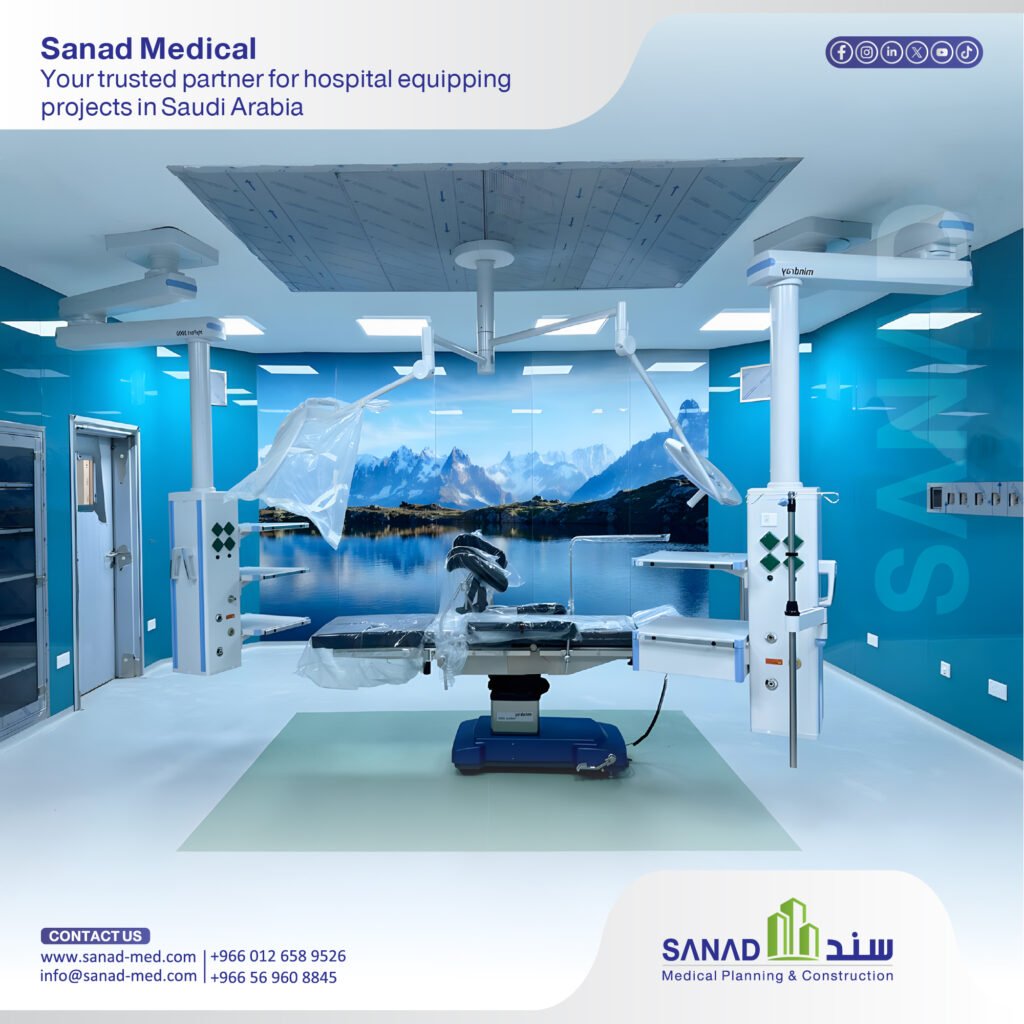
Why Choose Sanad Medical?
Sanad Medical leads the healthcare outfitting sector in Saudi Arabia, acting as a strategic partner to healthcare investors from concept design to operational commissioning.
Sanad Medical consistently fulfills the highest industry benchmarks:
- Proven Field Record: Successful track record in outfitting and qualifying licensed healthcare facilities across the Kingdom.
- Specialized Engineering Team: Fully integrated internal teams covering medical architecture, mechanical systems, gas pipelines, and radiation protection.
- Regulatory Compliance Expertise: Complete alignment with MOH, CBAHI, SFDA, and NRRC operational standards.
- High-Specification Materials: Sole use of certified, medical-grade materials and cutting-edge clinical infrastructure systems.
- Complete Turnkey Execution: End-to-end management ensuring project delivery within designated timelines and budgets.
- Ongoing Technical Support: Dedicated post-handover maintenance and technical assistance ensuring continuous facility readiness.
Build Your Healthcare Project on the Right Foundation
Selecting your medical outfitting partner is a foundational decision that impacts the safety, operational efficiency, and longevity of your healthcare facility. It requires choosing a partner with deep engineering expertise, regulatory fluency, and a commitment to clinical excellence.
Contact the engineering team at Sanad Medical today to schedule a comprehensive technical consultation for your upcoming healthcare project.
👉 [Contact the Sanad Medical Engineering Team Today to Plan Your Healthcare Outfitting Project]
Frequently Asked Questions (FAQ)
- Q: How does a specialized medical outfitting company differ from a general construction contractor?
- A: Specialized medical outfitting firms possess deep expertise in healthcare-specific engineering, including radiation shielding, central medical gas distribution networks, operating theater laminar airflow systems, and clinical infection control zoning. They also manage the entire regulatory licensing pathway with health authorities, whereas general contractors focus primarily on basic civil works.
- Q: How does proper outfitting design ensure compliance with CBAHI standards?
- A: CBAHI compliance requires embedding facility safety, environmental control, and infection prevention standards directly into the initial architectural and mechanical designs. Specialized medical outfitters structure the physical plant to meet these accreditation standards from day one, avoiding costly post-construction modifications.
- Q: Why is a specialized radiation protection study required before building imaging suites?
- A: A certified radiological study calculates the precise lead thickness required based on equipment power, room dimensions, and adjacent structural occupancy. This protects staff and patients while ensuring full compliance with national radiation safety regulators.
- Q: What does a complete Turnkey medical outfitting scope include?
- A: Turnkey outfitting covers the entire journey: initial medical space planning, MEP design, radiation shielding, medical gas piping, specialized flooring and ceiling installation, equipment positioning, system testing, staff operational training, and final handover for health authority licensing.