
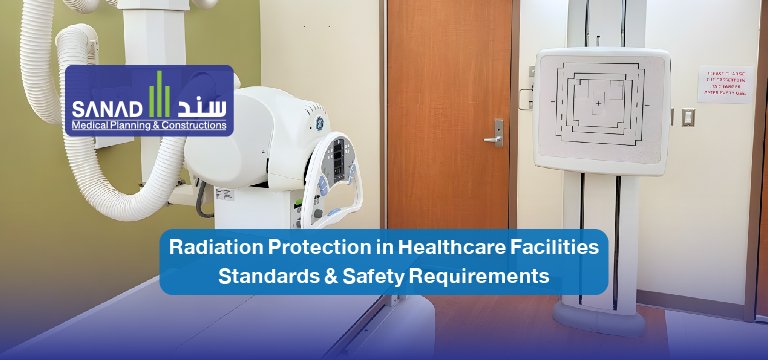
Introduction: The Critical Balance of Technology and Safety
In the sophisticated landscape of 2026 Saudi healthcare, advanced diagnostic tools such as X-rays, Computed Tomography (CT Scans), and Interventional Radiology have become indispensable for precise patient care. However, with the immense benefits of ionizing radiation comes a profound responsibility: the implementation of absolute Radiation Protection.
Radiation protection is not merely a precautionary step; it is a fundamental pillar of medical infrastructure. It ensures the safety of patients, healthcare professionals, and the general public while ensuring full compliance with the rigorous regulations of the Kingdom of Saudi Arabia. As the Kingdom pursues Vision 2030, the standard for radiation safety has moved from basic compliance to “Zero-Risk” engineering.
In this comprehensive guide, we explore the core concepts of radiation protection, international and local standards, and the specialized role of Sanad Medical (سند الطبية) in delivering turnkey, compliant medical environments.
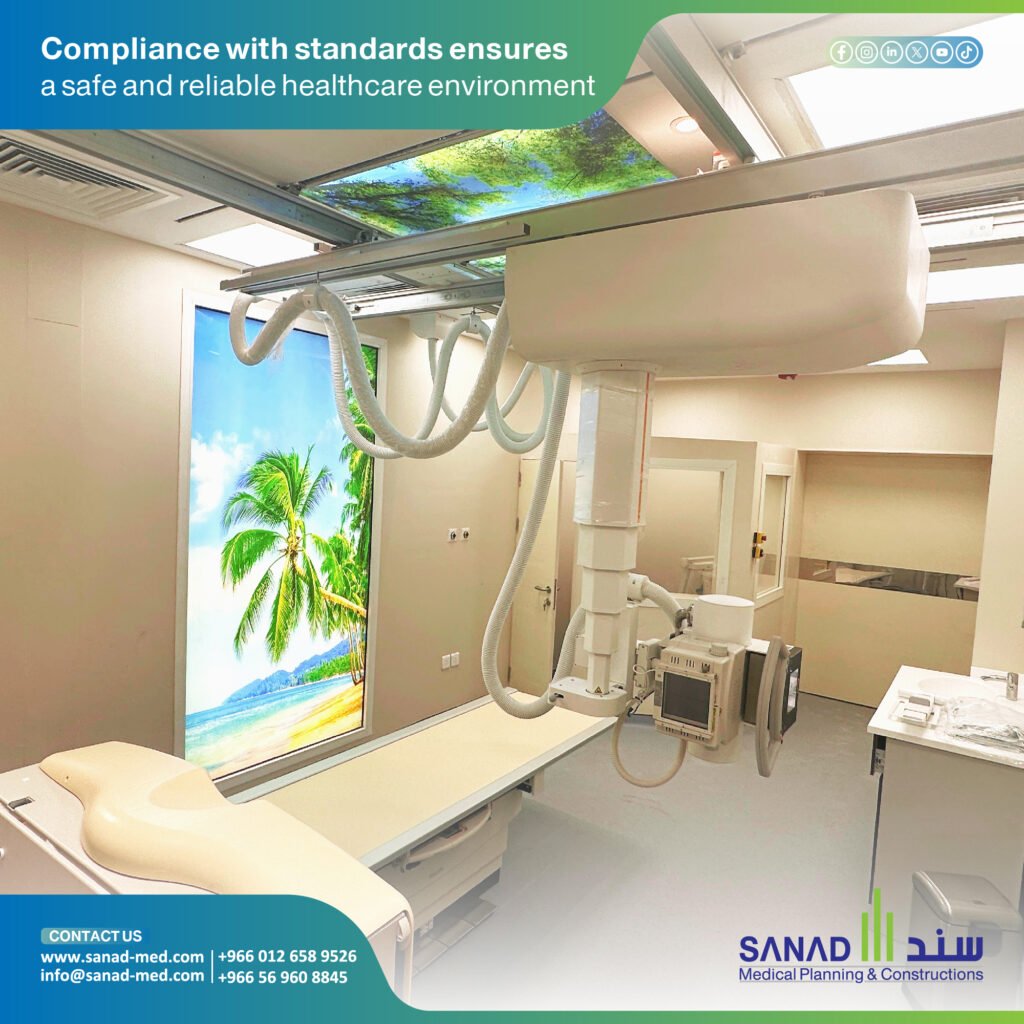
Defining Radiation Protection: The ALARA Principle
Radiation protection refers to a specialized set of engineering, architectural, and administrative measures designed to minimize exposure to ionizing radiation. The global gold standard for this practice is the ALARA Principle:
ALARA: As Low As Reasonably Achievable.
In the context of Saudi medical facilities, ALARA means that every design choice—from the thickness of lead lining to the layout of the diagnostic imaging department—must be optimized to keep radiation doses at the absolute minimum required to achieve high-quality clinical results.
Why Radiation Protection is Paramount in 2026
As Saudi Arabia experiences a surge in private and public specialized clinics, radiation safety has become a key differentiator for high-quality healthcare providers. Its importance spans several dimensions:
- Patient Safety: Preventing unnecessary exposure that could lead to biological tissue damage.
- Occupational Health: Protecting radiologists, technicians, and nursing staff who work near radiation sources daily.
- Regulatory Immunity: Avoiding heavy fines or facility closures by the NRRC (Nuclear and Radiological Regulatory Commission).
- Accreditation (CBAHI): Radiation safety is a non-negotiable requirement for obtaining and maintaining Saudi healthcare accreditation.
- Institutional Reputation: Building trust with patients who are increasingly aware of safety standards.
The Regulatory Framework in Saudi Arabia
Navigating radiation protection requires strict adherence to multiple Saudi authorities. By 2026, the integration between these bodies has become seamless:
- Nuclear and Radiological Regulatory Commission (NRRC): The primary authority governing all radioactive sources and radiation-emitting devices in the Kingdom.
- Ministry of Health (MOH): Sets the operational standards for diagnostic and therapeutic radiology.
- Saudi Health Council: Coordinates the national standards for radiological services.
- CBAHI: Ensures that the physical plant meets the safety criteria during hospital audits.
Sources of Radiation in Modern Facilities
Effective protection starts with understanding the source. Sanad Medical designs protection strategies based on the specific modality:
- Diagnostic Radiology: General X-rays, Dental X-rays, and Mammography.
- High-Dose Imaging: Multi-slice CT Scans and Fluoroscopy.
- Interventional Radiology: Real-time imaging used during surgeries.
- Nuclear Medicine: Using radioactive isotopes for PET/CT scans.
- Radiotherapy: Linear accelerators used for cancer treatment, requiring the highest level of structural shielding.
Engineering Requirements for Radiation Shielding
The primary defense against radiation is Shielding. This is where medical planning meets structural engineering.
1. Structural Shielding (Lead Lining)
The walls, ceilings, and floors of imaging rooms must be lined with radiation-absorbent materials.
- Lead Sheets: Applied to walls to prevent radiation from penetrating adjacent rooms.
- Lead-Lined Doors: These are specialized, heavy-duty doors that must overlap with the wall shielding to prevent “radiation leakage.”
- Lead Glass Windows: Observation windows that allow technicians to monitor patients while remaining protected by a lead-equivalent barrier.
2. Architectural Medical Planning
Radiation safety begins on the drawing board. Sanad Medical utilizes advanced architectural software to:
- Zone the Facility: Placing high-radiation rooms (like CT or PET) away from high-traffic public areas or pediatric wards.
- Calculate Occupancy Factors: Analyzing who is in the adjacent rooms (e.g., a hallway vs. a full-time office) to determine the necessary shielding thickness.
- Safe Traffic Flow: Designing corridors so that patients and staff do not unknowingly cross paths with radiation-emitting zones.
3. Specialized Electromechanical Systems
- Warning Signs & Lights: Synchronized lights above doors that turn red when the X-ray tube is energized.
- Interlock Systems: Automatically shutting down the radiation source if a door is opened during a procedure.
Operational Safety: Beyond the Walls
Once the room is built, the “Human Element” takes over. Safety in 2026 involves:
- Dosimetry Monitoring: All staff must wear personal dosimeters to track their cumulative radiation exposure.
- PPE (Personal Protective Equipment): Providing lead aprons, thyroid shields, and leaded eyewear for staff during interventional procedures.
- Quality Control (QC) Testing: Regular leakage tests and machine calibrations to ensure the beam is focused and not “scattering” unnecessarily.
The Specialized Role of Sanad Medical (سند الطبية)
Implementing radiation protection is a multi-disciplinary challenge that few companies can handle holistically. Sanad Medical stands out in the Saudi market by offering a “Concept-to-Commissioning” solution.
Why Sanad Medical?
- Integrated Planning: We don’t just supply materials; we plan the medical flow, ensuring the layout maximizes both safety and operational efficiency.
- Regulatory Expertise: Our team handles the complex documentation required for NRRC and MOH approvals, saving facility owners months of bureaucratic delays.
- Premium Materials: We source and install high-purity lead lining and radiation-shielding components that meet international $Cu$ and $Pb$ standards.
- Advanced Technology: Incorporating AI-driven dose monitoring and smart warning systems into the facility’s infrastructure.
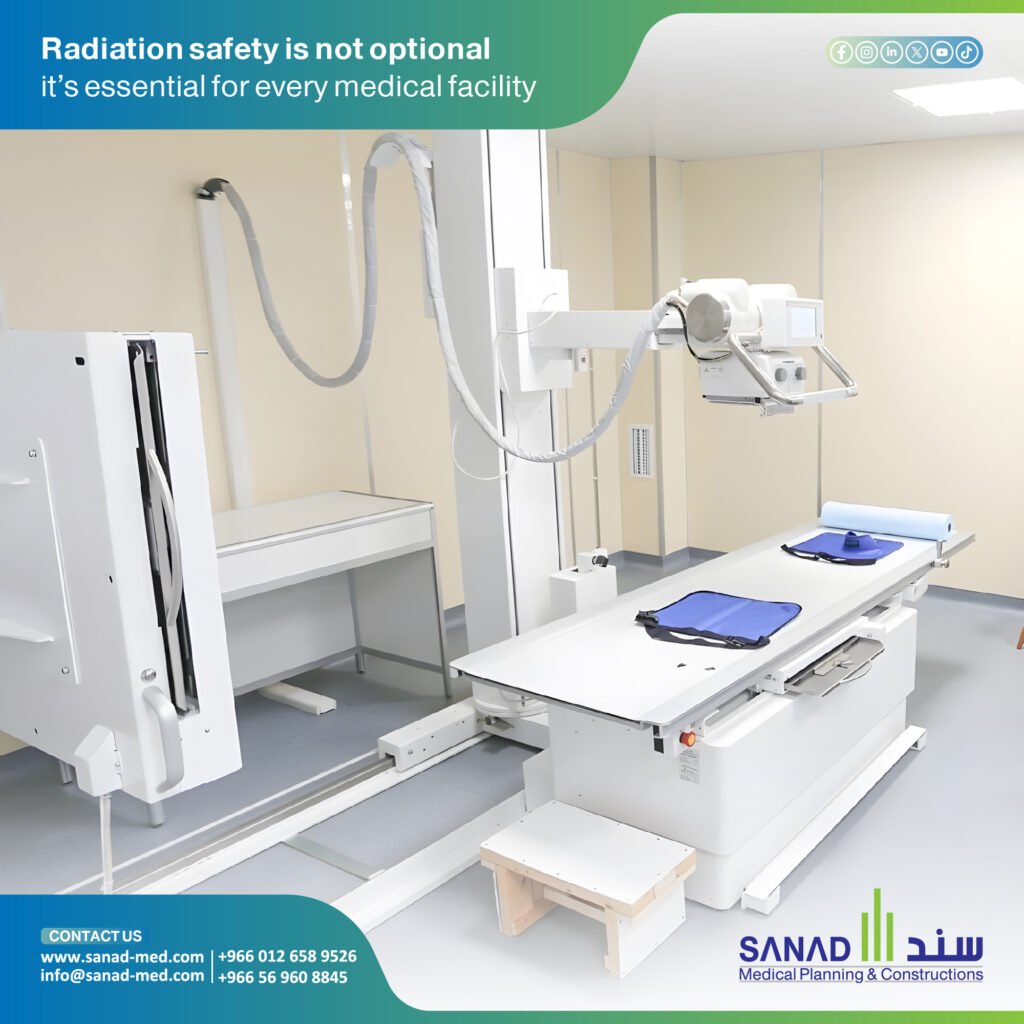
Common Challenges and How to Avoid Them
Many facilities face delays or safety failures due to:
- Poor Initial Design: Underestimating the shielding needed for high-energy machines.
- Substandard Materials: Using lead glass or doors that do not meet the specified “Lead Equivalence” ($mmPb$).
- Lack of Maintenance: Shielding can degrade or be damaged during renovations if not monitored.
By partnering with Sanad Medical, these risks are mitigated through professional oversight and a commitment to the highest engineering standards.
The Future: Smart Radiation Safety in Vision 2030
The future of Saudi healthcare is digital. In 2026, radiation protection is being revolutionized by:
- Virtual Reality (VR) Training: Training technicians in a simulated environment to reduce accidental exposure.
- Smart Shielding: Materials that are lighter yet more effective than traditional lead.
- Automated Reporting: Systems that automatically send exposure reports to the NRRC portal.
Frequently Asked Questions (FAQ)
1. What is the safe limit for radiation exposure for hospital staff?
The NRRC sets strict annual dose limits (typically 20 mSv per year averaged over five years). Sanad Medical designs systems to keep staff exposure well below these limits.
2. Does every X-ray room need lead lining?
Yes, but the thickness (e.g., 1.5mm, 2.0mm, or more) depends on the workload, the energy of the machine, and the occupancy of surrounding areas.
3. Can Sanad Medical upgrade old radiation rooms?
Absolutely. We specialize in retrofitting older facilities to meet the new 2026 CBAHI and NRRC safety standards.
4. Is lead the only material used for shielding?
While lead is common, we also use high-density concrete and specialized barium plaster for certain high-energy applications like Radiotherapy bunkers.
Conclusion: A Secure Foundation for Health
Radiation protection is a non-negotiable necessity for any medical facility aiming for excellence in Saudi Arabia. Investing in proper shielding, expert planning, and compliant materials is the only way to ensure a safe environment for patients and a sustainable future for the healthcare business.
At Sanad Medical (سند الطبية), we don’t just build rooms; we anchor safety standards to build the future of health in the Kingdom.
Are you planning to establish or upgrade a Radiology Center in Saudi Arabia?
The team at Sanad Medical provides you with integrated solutions—from initial medical planning and shielding design to full execution and regulatory approval. Ensure your facility is 100% compliant and safe from day one.
📩 Contact us today for a professional consultation.
🚀 Start your project with confidence… from the first step to full operation.