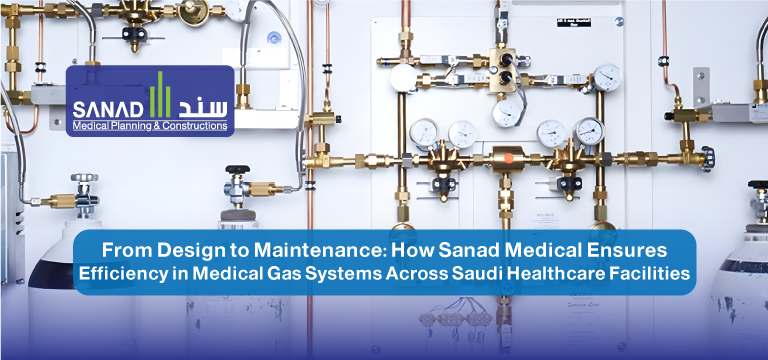
In the age of advanced healthcare, Medical Gas Systems (MGS) have become the backbone of any modern medical facility, especially in Saudi Arabia, where the pace of healthcare sector development is accelerating in line with Vision 2030.
These systems, which involve the supply of vital gases like Oxygen , Nitrous Oxide , Medical Air, and Carbon Dioxide, are not just supply lines; they are complex networks that ensure safety and efficiency in surgical operations, Intensive Care Units (ICU), and isolation wards.
With the increasing demand for high-quality healthcare services, Sanad Medical (Sanad Medical) has emerged as a key player in this field, offering end-to-end solutions from the design stage to periodic maintenance, guaranteeing continuous performance and risk mitigation. [ sanad-med.com ]
Sanad Medical was established as a Saudi company specializing in the outfitting of hospitals and healthcare buildings, relying on a team of experts with extensive experience in executing healthcare projects. According to market reports, the size of the Medical Gases Market in Saudi Arabia was estimated at USD 410.60 million in 2023, with high annual growth expectations driven by the increase in the number of hospitals and medical centers.
In this article, we will review how Sanad Medical ensures the efficiency of these systems across their main stages, focusing on local considerations in Saudi Arabia, such as compliance with the Saudi Food and Drug Authority (SFDA) standards and the approved list of medical gases. We will also cover common challenges and innovative solutions, providing a comprehensive guide for healthcare officials and engineers.

The Design Phase: The Sound Foundation for Efficiency
The success of any medical gas system begins with a precise design phase, which must take into account the specific needs of the medical facility, such as the hospital size, the number of operating rooms, and the quality of services provided.
In Saudi Arabia, the design must adhere to international standards such as NFPA 99 (Health Care Facilities Code), in addition to local regulations from the SFDA, which classifies medical gases as drugs and requires strict registration. Sanad Medical excels here through its integrated approach, conducting preliminary feasibility studies that include Gas Flow Analysis and environmental risk assessment, especially in hot climate regions like Jeddah or Riyadh, where high temperatures can affect gas pressure.
In the design process, Sanad Medical focuses on selecting the appropriate materials, such as Tonoli copper pipes, used to safely transport gases without contamination. Our company designs a system supporting multiple gases with climate control systems to precisely adjust temperature and humidity, ensuring up to 99% efficiency in gas distribution. The design also includes the integration of Automated Control Systems, such as Automatic Shut-off Valves, to prevent leaks—a critical feature in preventing accidents that could lead to human loss.
Furthermore, Sanad Medical considers environmental sustainability, designing systems that reduce energy consumption through the use of Efficient Vacuum Pumps. In the context of Vision 2030, these designs contribute to enhancing the operational efficiency of Saudi hospitals, where the number of health facilities is expected to reach over 1,000 hospitals by 2030, increasing the demand for reliable solutions. The result? A system that supports critical operations without interruption, with low long-term operating costs.
Implementation and Installation Phase: Precision in Execution
Following design comes implementation, the stage that translates drawings into reality. Sanad Medical offers Turnkey Solutions, covering supply, installation, and testing, ensuring full compliance with standards. In Saudi Arabia, where regulations require gases to be registered as drugs, the company integrates the Rationalized System for Drug Registration (RSD) tracking system, ensuring every gas used aligns with the approved list.
During installation, Sanad Medical prioritizes the safety of workers and patients. For instance, in installing Medical Gas Pipeline Systems (MGPS), they use precise Brazing Techniques with specialized brazing rods to ensure leak-free connections, considered optimal for medical gas systems in the Kingdom. The process also includes Pressure Testing and Flow Testing for each gas line, adhering to ISO 7396-1 standards for centralized medical gas systems.
In projects like outfitting and ICU units, the company installs life-support gas systems integrated with Monitoring Devices that detect any changes in pressure or quality. This approach reduces Downtime to less than 1%, compared to traditional rates that might reach 5% in non-specialized facilities. Additionally, given the diagnostic revolution in Saudi Arabia, Sanad Medical incorporates technologies like Blood Gas Analysis into its designs, enhancing diagnostic accuracy.
Maintenance Phase: Ensuring Continuity and Safety
Maintenance is the final pillar of efficiency, preventing failures and extending the system’s lifespan. Sanad Medical offers Preventive Maintenance Programs that include periodic inspections every three months, focusing on Filter Cleaning and Valve Inspections. In Saudi Arabia, where dust and heat pose environmental challenges, these programs are designed to counter obstruction risks, maintaining a 100% gas flow rate.
Maintenance also includes training medical teams on system usage, alongside a Pharmacovigilance System to detect any issues in gas quality. In one instance, Sanad Medical’s maintenance service at a Jeddah hospital helped discover a potential leak in the Vacuum System, preventing a major incident. The company also supports sustainability through Cylinder Recycling Programs, reducing costs by 20-30%.
Regarding risks, studies show that 70% of MGPS failures result from inadequate maintenance. Thus, Sanad Medical focuses on Remote Monitoring technologies using IoT, allowing real-time performance tracking. This aligns with the evolution of gas systems in Saudi Arabia, where digital technologies are becoming essential for efficiency.

Challenges and Solutions in the Saudi Context
Despite the progress, medical gas systems face challenges such as high procurement costs, especially when relying on international companies like Linde and Air Products. Sanad Medical addresses this through local partnerships, reducing costs by 15%. Complex SFDA compliance requirements are also met with comprehensive support for the registration process.
In conclusion, Sanad Medical ensures the efficiency of medical gas systems through a comprehensive approach covering design, implementation, and maintenance, enhancing safety and sustainability in the Saudi healthcare sector. With continued growth, such companies will remain key to achieving Vision 2030. Contact Sanad Medical for a free consultation.