
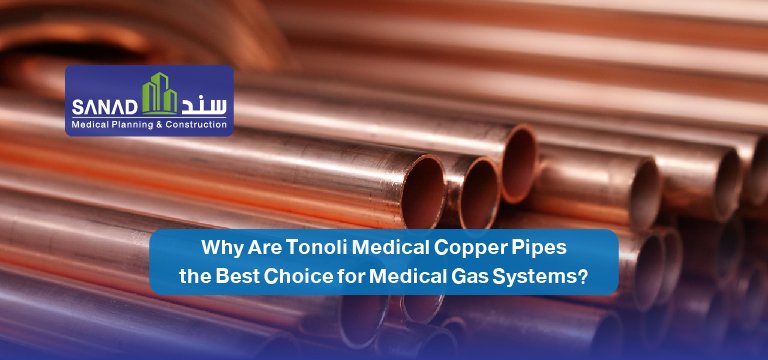
In medical gas systems, a pipe is not just a means of transport — it is a literal lifeline. Whether it is oxygen delivered to a patient in critical care, medical air powering a ventilator, or clinical vacuum utilized within an operating theater, all of these life-supporting gases flow through a vast network of pipes embedded within the walls and ceilings of a healthcare facility. Any failure within these pipelines — whether through contamination, leakage, or structural degradation — results in far more than financial loss; it poses an immediate and severe threat to patient lives. To guarantee the safety of this complex framework, partnering with the best specialized medical engineering and network installation company is the primary foundation for securing operational reliability.
This is why Tonoli Medical Copper Pipes are deployed as the absolute benchmark in medical gas infrastructure projects executed by Sanad Medical across the Kingdom of Saudi Arabia. In this comprehensive technical guide, we explore the unique properties of medical-grade copper, what elevates Tonoli as the globally trusted choice, and how these systems directly safeguard patient health while fulfilling stringent international and national healthcare regulations.
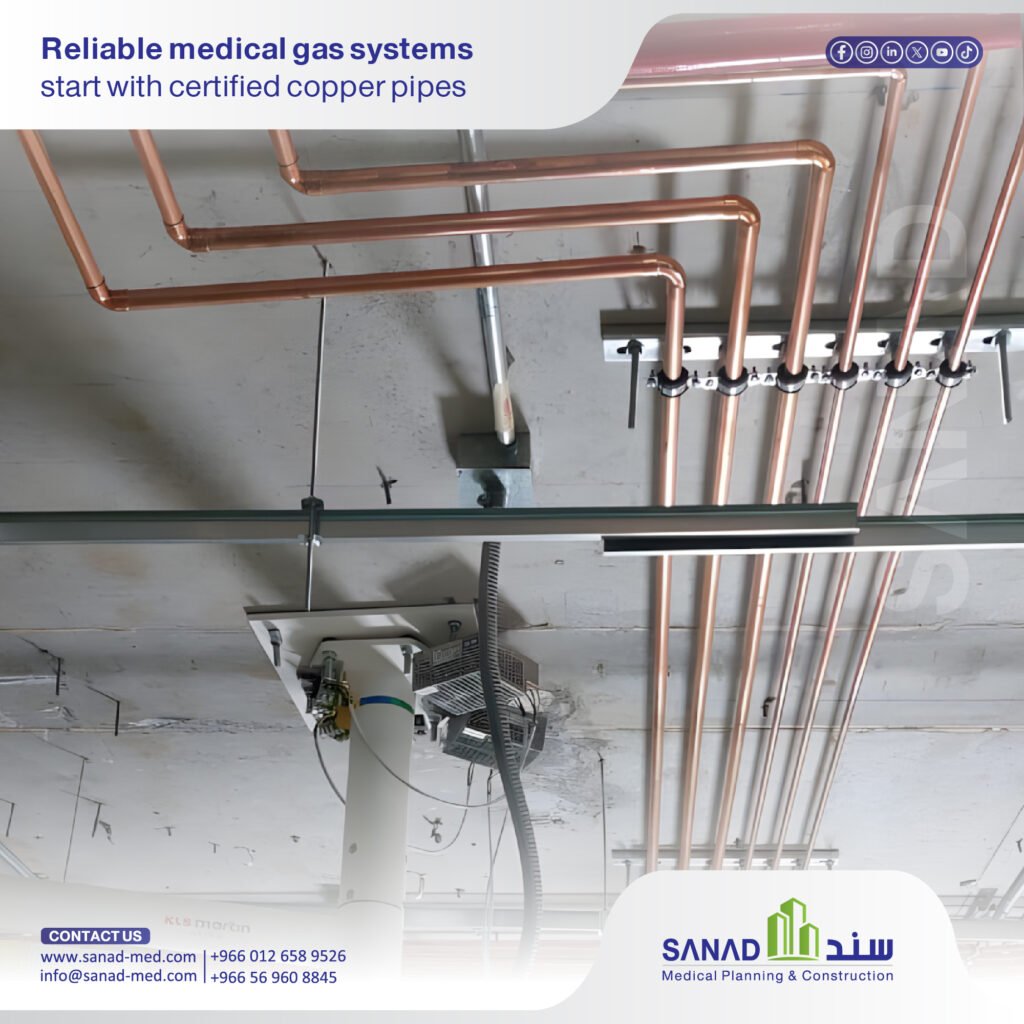
First: Why is Copper the Ultimate Choice for Medical Gas Systems?
When designing life-safety systems, engineers evaluate multiple materials, including stainless steel and advanced polymers. However, specialized copper remains the unrivaled choice globally due to its exceptional physical and chemical characteristics:
- Superior Corrosion Resistance: Copper naturally develops a protective internal oxide layer when exposed to atmosphere. This layer insulates the pipe from internal corrosion, ensuring the clinical purity of the passing gas over decades without any risk of wall degradation or particulate shedding.
- Chemical Inertness with Medical Gases: Medical-grade copper does not react with medical oxygen, nitrous oxide, carbon dioxide, or clinical vacuum. This absolute stability ensures that medical gases reach the patient bedside in their purest form, completely free of chemical alteration.
- Natural Antimicrobial Properties: Copper possesses inherent antimicrobial properties. The internal copper surfaces actively inhibit and suppress the growth of bacteria, fungi, and biofilms, providing a critical layer of biological protection within highly sensitive clinical environments.
- High-Integrity Brazing and Joint Security: Copper responds exceptionally well to capillary hard soldering and high-temperature brazing using specialized silver alloys. This allows installation teams to create structurally seamless, leak-proof joints capable of withstanding high operational pressures.
- Extended Operational Lifecourse: When properly designed, installed, and maintained, copper pipeline infrastructures operate efficiently for decades without any deterioration in physical integrity or flow performance.
Second: Who is Tonoli? And Why This Specific Brand?
Tonoli is a premier European manufacturer specializing in the production and global distribution of ultra-pure medical copper tubes and high-precision copper fittings. Their signature line of MEDICALFEIN pipelines is engineered specifically to meet the rigorous benchmarks of European medical device directives, holding official certifications as a regulated medical device.
This unique classification distinguishes Tonoli from standard commercial or industrial plumbing tubes. In a healthcare facility, utilizing basic industrial copper is strictly prohibited; the piping network must be explicitly certified, branded, and verified as a regulated medical device by international governing bodies to ensure compliance with clinical life-safety laws.
Third: Technical Specifications of MEDICALFEIN Systems
The technical properties of Tonoli MEDICALFEIN tubes utilized by Sanad Medical highlight why they are preferred for critical healthcare networks:
- Standardization: Fully compliant with harmonized European engineering standards and specific medical copper pipeline codes.
- Alloy Classification: Fabricated from premium, deoxidized high-phosphorus copper tubes.
- Ultra-Pure Composition: Formulated with an exceptionally high pure copper and silver content threshold to eliminate trace impurities, with precisely regulated residual phosphorus levels.
- Versatile Form Factors: Supplied in flexible, continuous coils for minimized jointing in long runs, as well as rigid, straight hard and half-hard lengths optimized for main distribution risers and horizontal mains.
The ultra-pure formulation of these tubes is a critical safety feature. Any trace elemental impurities within the base metal could react under pressure with medical oxygen, leading to dangerous internal oxidizing reactions or gas contamination.
Fourth: Global Certifications and Quality Documentation
Tonoli MEDICALFEIN systems are backed by premium quality assurances that allow no compromise:
- They carry the official CE Mark, confirming complete alignment with European medical device directives and subsequent amendments.
- They are classified and labeled explicitly as verified clinical medical devices.
- Every production run is accompanied by dedicated material test certificates, providing traceability and verifying that the specific batch has successfully undergone structural, dimensional, and cleanliness inspections before arriving at the project site.
This batch-specific certification process provides Sanad Medical and healthcare authorities with absolute assurance that the exact materials installed in the operating theaters match the pristine standards required by international medical regulations.
Fifth: Where Are Tonoli Copper Pipelines Deployed?
The MEDICALFEIN specialized copper infrastructure is utilized to execute the complete medical gas architecture inside modern hospitals:
| Medical Gas System | Role of Copper Piping Infrastructure |
| Medical Gas Pipeline Systems (MGPS) | The overarching life-support distribution network throughout the facility. |
| Oxygen and Specialized Gas Lines | High-pressure lines routing critical life-support gases directly to patient bedsides. |
| Medical Air and Vacuum Networks | Supplying high-pressure air for respiratory equipment and driving clinical suction. |
| Anesthetic Gas Scavenging Systems (AGSS) | Extraction pathways capturing and venting waste gases away from operating suites. |
Sixth: How Sanad Medical Designs Gas Networks Using Tonoli Systems
At Sanad Medical, the integration of Tonoli pipelines is executed as part of a highly detailed, comprehensive engineering workflow:
- Precision Hydraulic Calculations: Our engineering teams conduct fluid dynamics modeling to determine precise pipe diameters for every branch, maximizing flow rates while mitigating pressure drops across the facility.
- Advanced Climate and Environment Mapping: Integrating gas distribution with automated environmental and climate controls to maintain ideal ambient conditions, ensuring optimal system performance and maximum distribution efficiency.
- Strategic Isolation and Sectional Control: Incorporating automated shut-off valves and strategic isolation points, allowing facilities to isolate specific wards for maintenance without interrupting the gas supply to critical areas.
- Smart Monitoring Integration: Connecting the distribution networks directly to centralized digital alarm panels and Zone Valve Boxes for real-time pressure monitoring and leak detection.
- Terminal Unit Synchronization: Seamlessly routing lines to terminal wall outlets and surgical pendants in patient rooms, intensive care units, and operating theaters.
Seventh: Strict Installation Mandates: Where True Expertise Matters
Procuring premium copper is only the first step toward a safe system; the execution of the installation dictates whether the network will remain secure or suffer from hidden leaks and contamination. Sanad Medical implements rigorous site protocols:
- Terminal Cleanliness Protocols: All pipes are sealed at the factory and undergo strict internal degreasing and cleaning prior to installation to ensure they are completely free of oils, carbon residues, and manufacturing lubricants.
- Purge-Protected Brazing: Hard soldering and brazing are conducted while simultaneously purging the interior of the pipe with an inert shield gas, such as medical-grade nitrogen. This prevents the formation of black copper oxide scale inside the pipe during heating.
- Rigorous Integrity Pressure Testing: Once installed, the entire network is subjected to extended static pressure tests using dry, oil-free nitrogen at elevated pressures to uncover the smallest micro-fissures before the system is commissioned.
- Optimized Radius Bending: Utilizing precision bending tools to form gradual directional shifts, minimizing sharp angles that cause turbulence and restrict gas velocity.
- Standardized International Color Coding: Every single run of pipe is clearly labeled with distinct, color-coded regulatory bands identifying the specific gas type and flow direction, preventing any cross-connection errors during future expansions.
Eighth: Alignment with Saudi Healthcare Standards and Accreditations
Sanad Medical provides premium medical gas infrastructure and certified copper fittings manufactured in strict accordance with harmonized European standards, customized to meet the rigorous building codes of the Kingdom of Saudi Arabia.
These combined material standards form the exact quality framework reviewed by Saudi regulatory authorities during licensing phases by the Ministry of Health (MOH) and audited directly by CBAHI surveyors during on-site evaluations. Utilizing non-certified piping or failing to produce batch-specific cleanliness records can delay facility commissioning or result in non-compliance marks during accreditation audits.
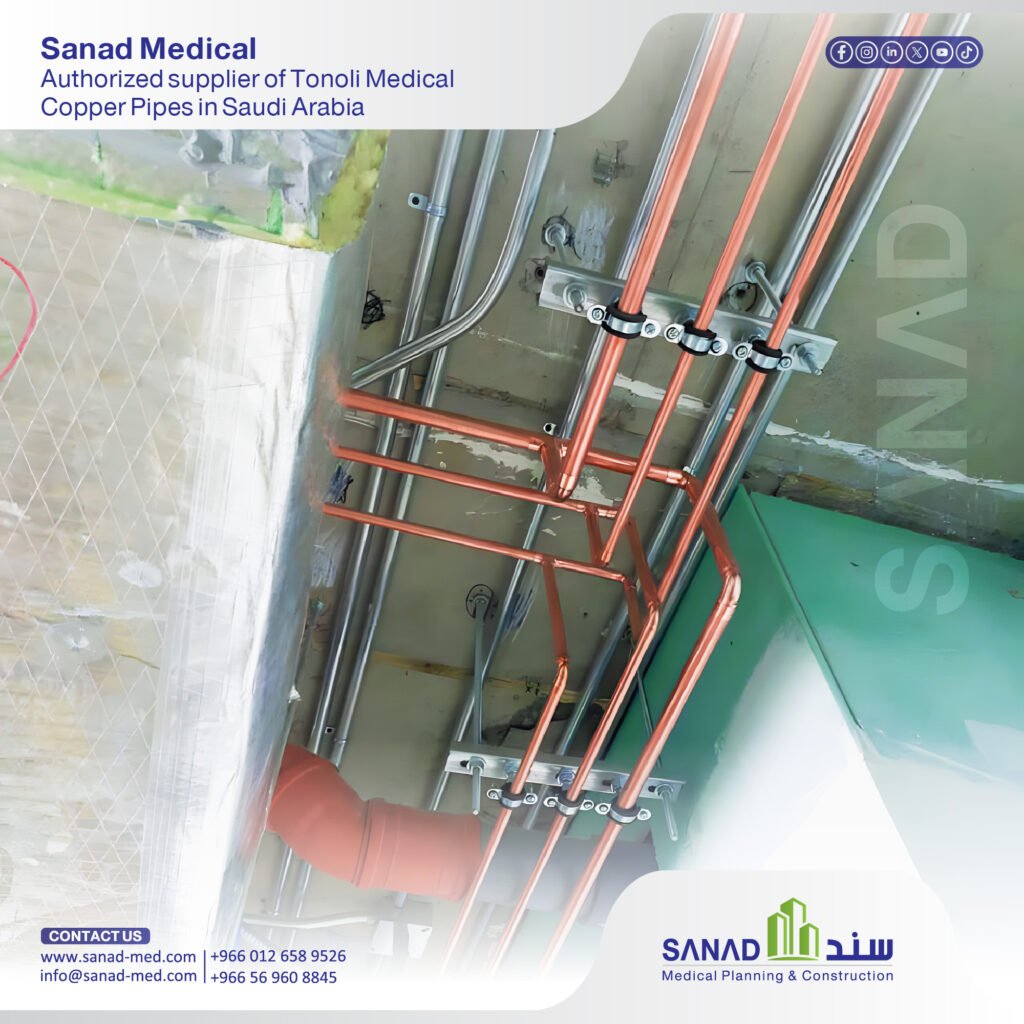
About Sanad Medical
Sanad Medical stands as the premier specialized expert in comprehensive medical engineering and healthcare facility outfitting across the Kingdom of Saudi Arabia. The company provides turn-key engineering solutions, specializing in advanced medical gas network design, medical ventilation architectures, and certified radiation shielding frameworks. Our teams handle everything from site surveys and specialized lead-lining installations for diagnostic rooms to the execution of ultra-pure fluid mechanics. The deep regulatory and technical expertise of Sanad Medical ensures your healthcare project is designed and executed flawlessly from day one, accelerating your licensing path through the Ministry of Health (MOH), CBAHI, and the Nuclear and Radiological Regulatory Commission (NRRC).
Conclusion
A hospital’s medical gas pipeline network is its invisible circulatory system. Investing in premium materials like Tonoli Medical Copper Pipes is a foundational commitment to long-term operational safety, zero-leak reliability, and absolute compliance with national healthcare mandates.
The specialized medical engineering division at Sanad Medical is fully equipped to design, source, install, and certify your facility’s medical gas infrastructure in strict alignment with international safety standards.
Frequently Asked Questions (FAQ)
- Q: What is the primary difference between medical copper pipes and standard plumbing pipes?
- A: Medical copper pipes are officially registered and certified as clinical medical devices. They are manufactured under extreme cleanliness controls to ensure the interior walls are entirely free of trace carbon or oil residues, and they feature a minimum purity profile that standard industrial plumbing tubes are not required to maintain.
- Q: Why must medical copper pipes undergo nitrogen purging during the high-temperature brazing process?
- A: When copper is heated in the presence of normal air, it oxidizes rapidly, forming flaky black copper oxide scale on the inside walls. If this scale enters the medical gas stream, it can clog ventilator filters, damage sensitive medical equipment, and pollute the medical gas delivered to patients. Purging with nitrogen eliminates oxygen, keeping the inside of the pipe completely clean.
- Q: What types of medical gases are typically managed by these copper pipeline networks?
- A: These networks safely route vital medical gases throughout the facility, including medical oxygen, breathing air for respiratory support, nitrous oxide for anesthesia, carbon dioxide for laparoscopic procedures, clinical vacuum lines, and dedicated exhaust systems for waste anesthetic gases.
- Q: How does Sanad Medical verify that a newly installed medical gas network is completely free of leaks?
- A: We conduct multi-stage structural pressure tests. The completed pipeline system is charged with oil-free nitrogen gas at pressures significantly higher than standard operating limits. This pressure is monitored via calibrated gauges over an extended period to ensure absolute stability and verify zero pressure drop before any medical gas is introduced.
- Q: Are medical copper pipes compatible with all types of sterilization and cleaning agents?
- A: Yes, the external surfaces of copper possess excellent chemical durability against standard hospital disinfectants. Internally, because the system remains sealed and pressurized with pure medical gases, the inner walls remain clean and protected by a natural oxide layer, eliminating the need for internal chemical cleaning post-commissioning.