
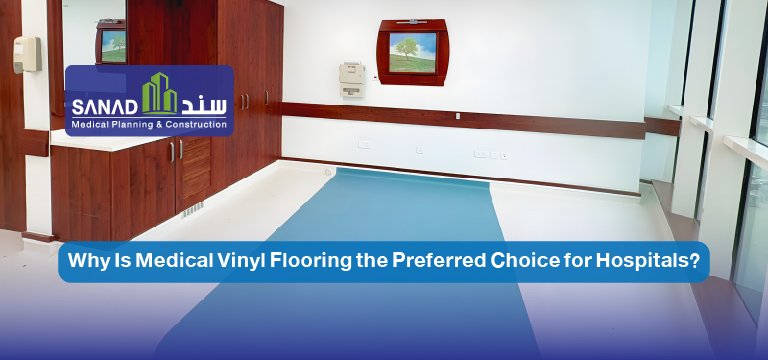
A hospital floor is far more than a surface to walk on — it is an active component in infection control frameworks, a direct factor in patient and staff safety, and one of the core standards evaluated by regulatory authorities during facility licensing, inspection, and accreditation surveys. Selecting the wrong flooring material in a healthcare setting leads to more than just high maintenance costs and rapid physical degradation — it creates an unsafe environment that contributes to spreading healthcare-acquired infections rather than preventing them. To guarantee the execution of this precise framework, partnering with the best specialized medical engineering and facility outfitting company is the primary foundation for securing a safe clinical environment. “Medical vinyl flooring From Sanad Medical Company “
Sanad Medical, the leading specialized partner in equipping and qualifying healthcare facilities across the Kingdom of Saudi Arabia, outlines in this comprehensive guide why Medical Vinyl Flooring represents the optimal solution for healthcare facilities — from sterile operating theaters to high-traffic corridors — and the mechanical and engineering standards required during selection and installation.
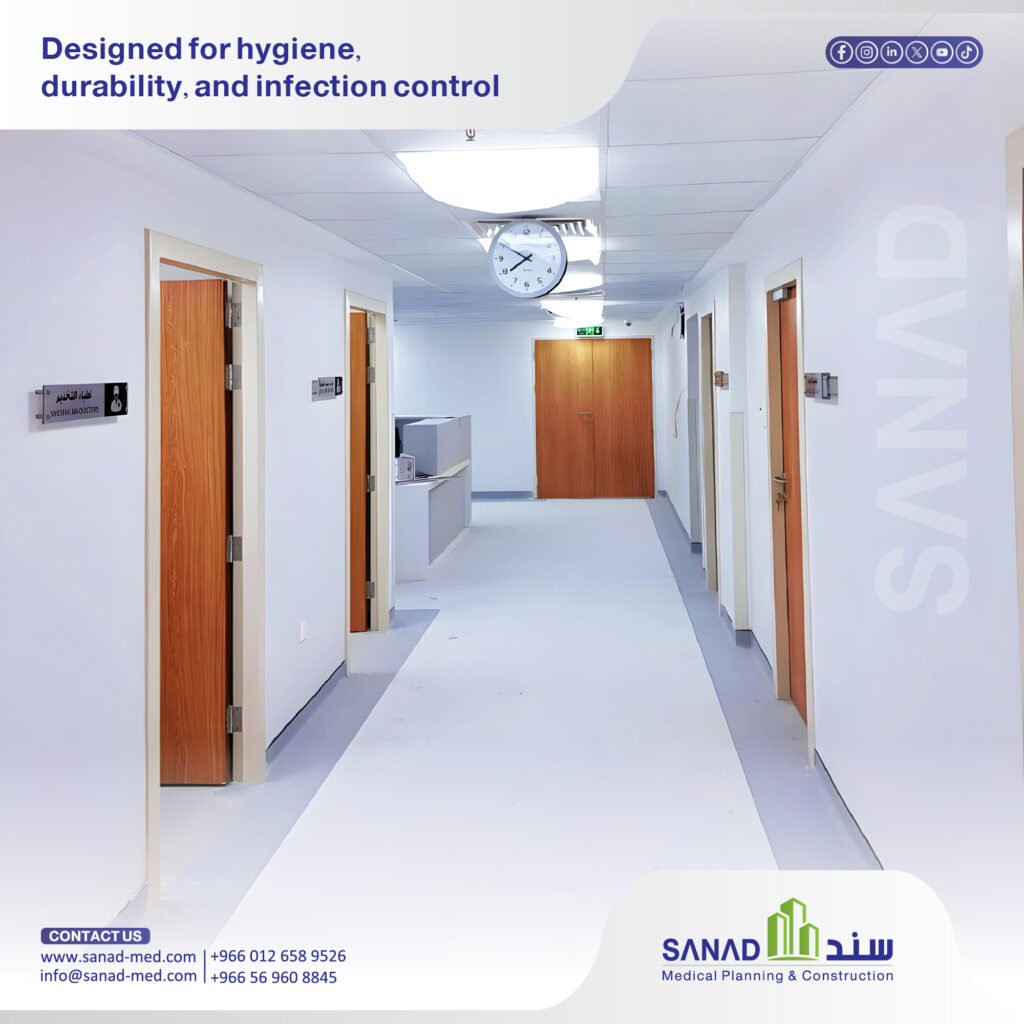
First: Understanding Medical Vinyl Flooring
Medical vinyl flooring is an advanced class of specialized synthetic flooring manufactured from high-grade Polyvinyl Chloride (PVC) compounds. It is integrated with specialized treatment additives that render it permanently resistant to bacteria, fungi, and microbes, while delivering exceptional chemical resistance against harsh disinfectants used in continuous sterilization protocols.
This distinction between standard commercial vinyl and medical-grade vinyl is fundamental; not all vinyl is suitable for clinical environments. Medical vinyl undergoes rigorous manufacturing and performance standards, enabling it to withstand daily chemical sanitization, continuous sterilization, and heavy, round-the-clock foot and equipment traffic without compromising surface aesthetics or protective efficiency.
Second: Why Medical Vinyl Flooring? Unique Clinical Advantages
Medical vinyl provides a comprehensive suite of engineering and protective properties that elevate it far above alternative flooring options in healthcare settings:
- Strict Antimicrobial Protection (The First Line of Defense): Medical vinyl features a non-porous surface that entirely prevents fluid absorption and biological contaminant accumulation. Unlike porous options such as ceramic tile grout lines or natural marble, medical vinyl is manufactured using antimicrobial technology that guarantees a clean, sterile environment, particularly within laboratories and critical care units.
- Resilience Against Repeated Chemical Sterilization: Specially formulated to resist potent disinfectants and mild acids without fading, cracking, or stripping away protective surface coatings, preserving long-term structural integrity.
- Slip Resistance and Movement Safety: Designed with a high coefficient of friction to protect patients and clinical staff from slipping accidents, even in the presence of moisture or accidental fluid spills.
- Seamless Installation with Thermal Welding: Installed using Thermal Welding techniques between rolls, completely eliminating seams and joints. This system integrates with a coved baseboard (Cove Base) made from the same material extending up the wall, creating a continuous, seamless basin that prevents dirt accumulation and liquid seepage behind walls and subfloors.
- High Durability Under Heavy Mechanical Loads: Engineered to withstand continuous rolling loads from patient beds, mobile diagnostic machinery, and electromechanical equipment without surface deformation or tearing.
- Acoustic Absorption and Environmental Comfort: Features built-in sound dampening properties that significantly reduce footfall noise and rolling equipment clatter, fostering a quiet environment conducive to patient healing.
Third: Comparing Medical Vinyl with Alternative Healthcare Flooring
The following comparison outlines the critical performance differences between medical vinyl and traditional flooring materials in clinical facilities:
| Technical Criteria | Medical Vinyl Flooring | Ceramic & Porcelain Tile | Epoxy Flooring | Natural Marble |
| Bacterial Resistance | Excellent (Non-porous antimicrobial surface) | High risk (Grout lines harbor microbes) | Good (Prior to cracking) | Poor (Porous material that absorbs fluids) |
| Resistance to Disinfectants | Excellent (Chemical-resistant formulation) | Good (Grout degrades over time) | Good (Degrades under heavy abrasion) | Corrodes and discolors |
| Slip Resistance & Safety | Very High (Engineered friction coefficient) | Moderate (Hazardous when wet) | Moderate to Low | Highly hazardous when wet |
| Ease of Maintenance | Excellent (Seamless thermally welded surface) | Poor (Grout lines collect debris) | Good | Extremely difficult (Requires polishing) |
| Acoustic Dampening | Excellent (Absorbs impact & rolling noise) | Poor (Amplifies sound) | Poor (Amplifies sound) | Poor (Amplifies sound) |
Fourth: Essential Standards to Verify When Selecting Medical Vinyl
When specifying approved medical vinyl flooring for a healthcare facility, Sanad Medical verifies complete material compliance with global regulatory standards:
- Quality and Environmental Safety Certifications: Ensuring materials carry recognized European quality marks for medical products and facilities.
- Slip Resistance Coefficient: Selecting the exact safety friction class suited to the specific operational demands of each department.
- Surface Protection Coating (PUR Coating): Ensuring a factory-applied protective layer that resists stains and chemical spills, eliminating the need for periodic wax treatments.
- Wear and Abrasion Resistance Index: Matching the vinyl thickness and wear layer to high-traffic movement zones.
Fifth: Tailoring Medical Vinyl by Clinical Department
Different hospital departments require specialized vinyl formulations based on their functional demands:
- Operating Theaters and Surgical Suites: Require conductive or static-dissipative vinyl (Antistatic / Conductive Vinyl) to prevent electrostatic discharges that could interfere with sensitive clinical electronics or interact with flammable medical gases.
- Intensive Care Units (ICU): Utilize high-grade antimicrobial vinyl with superior acoustic dampening to ensure a sterile, low-noise environment for critical patient recovery.
- Corridors and Main Entrances: Prefer homogeneous medical vinyl (Homogeneous Vinyl) to maximize wear resistance against heavy, continuous bed and trolley traffic.
- Patient Rooms and Wards: Deploy vinyl that balances antimicrobial performance with visual warmth and comfort to support patient psychological well-being.
Sixth: Strict Installation Engineering Protocols
The performance of medical vinyl relies directly on precision engineering during installation; incorrect application compromises its protective capabilities. Sanad Medical strictly enforces key site protocols:
- Subfloor Preparation and Leveling: Thoroughly treating the concrete substrate, removing moisture and surface irregularities, and applying self-leveling compounds to ensure a smooth, stable base.
- Specialized Medical Adhesives: Utilizing low-VOC, medical-grade adhesives that provide long-term bonding without off-gassing harmful odors into indoor air systems.
- Precision Thermal Welding: Using matching vinyl welding rods under controlled thermal conditions to fuse all seams into a unified, impervious surface.
- Seamless Coved Skirting (Cove Base): Executing wall coving at smooth curved radiuses up the wall, eliminating right-angled corners where dirt and microbes accumulate.
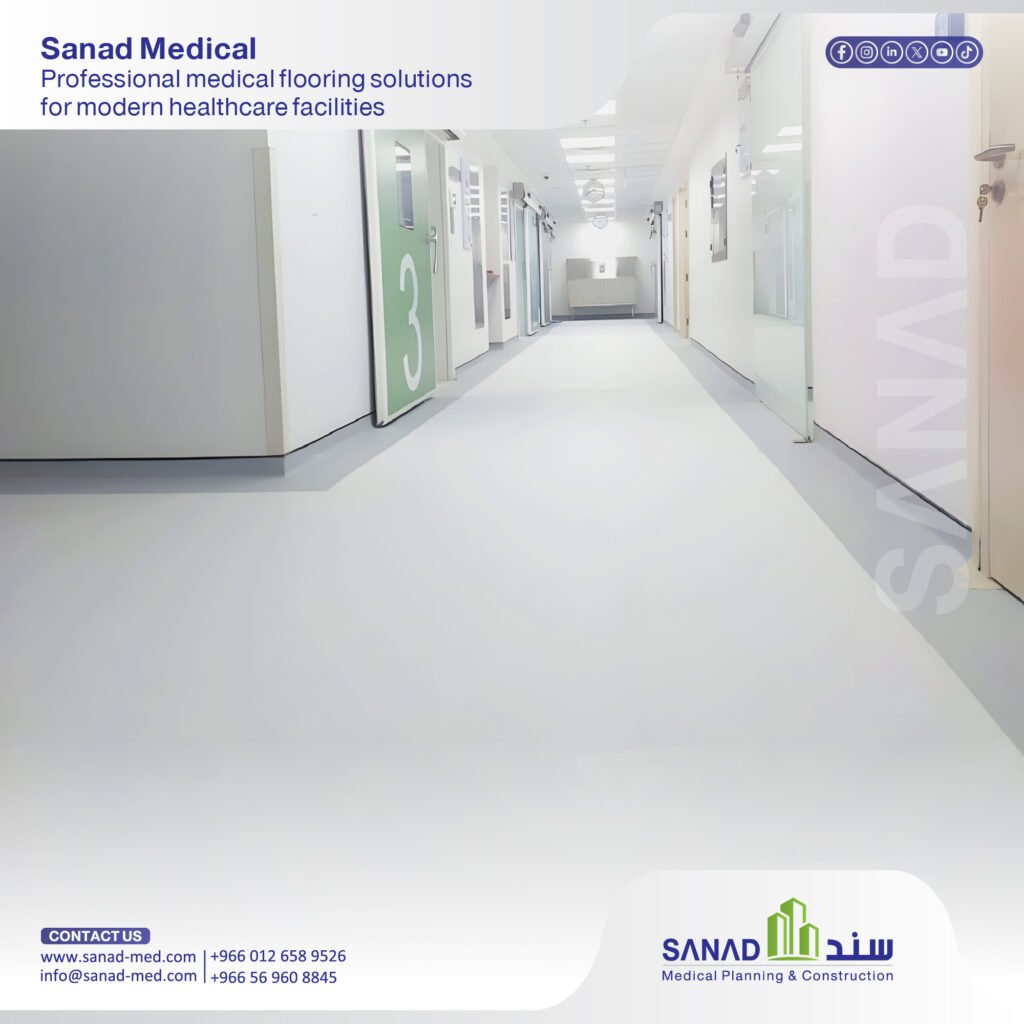
About Sanad Medical
Sanad Medical is recognized as the premier specialized expert in medical engineering and comprehensive healthcare facility outfitting across the Kingdom of Saudi Arabia. The company delivers end-to-end technical solutions, including expert consultation, medical gas pipeline engineering, sterile operating room outfitting, certified radiation shielding designs, and the supply and precision installation of specialized medical flooring and ventilation architectures. The deep field experience of Sanad Medical guarantees that your facility infrastructure is executed flawlessly from day one, preparing your facility to pass final licensing inspections by the Ministry of Health (MOH) and accreditation surveys by CBAHI rapidly and seamlessly.
Conclusion
Medical flooring is far more than a decorative detail — it is a foundational barrier protecting patient safety, facilitating clinical workflows, and preventing hospital-acquired infections. Proper engineering planning and selecting certified medical vinyl safeguard your investment and accelerate institutional licensing.
The dedicated engineering team at Sanad Medical provides complete turnkey solutions for sourcing, installing, and certifying all classifications of medical vinyl flooring tailored to your facility’s operational needs.
Frequently Asked Questions (FAQ)
- Q: What is the primary difference between Homogeneous and Heterogeneous medical vinyl?
- A: Homogeneous vinyl consists of a single, uniform layer of material throughout its entire thickness, delivering extreme wear resistance ideal for heavy-traffic corridors. Heterogeneous vinyl features multiple distinct layers engineered for sound absorption, underfoot comfort, and design versatility, making it ideal for patient wards and administrative areas.
- Q: Why is conductive or antistatic vinyl mandatory in operating theaters?
- A: Surgical equipment and movement generate static electricity. Conductive vinyl safely dissipates static charges to the ground, preventing electrical sparks that could ignite medical gases or cause electromagnetic interference with sensitive life-support monitors.
- Q: Can medical vinyl be installed over existing ceramic or tile floors?
- A: Yes, provided the existing substrate is structurally sound, thoroughly cleaned, sealed, and covered with a specialized self-leveling cement compound to create an ultra-smooth, moisture-free surface before laying the vinyl.
- Q: What is the main benefit of installing thermally welded Cove Base skirting?
- A: Coved skirting eliminates the sharp right-angled seam between the wall and the floor. By creating a continuous, smooth curved transition up the wall, it prevents liquid traps, eliminates microbial breeding grounds, and allows effortless, complete room disinfection.