
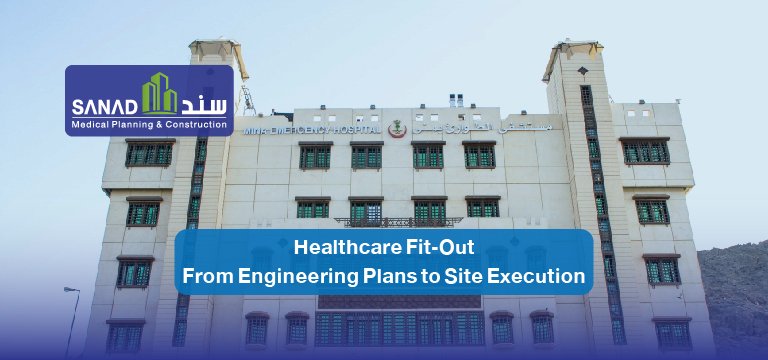
Between drafting the initial architectural layout and welcoming the first patient, healthcare fit-out involves a complex sequence of technical and regulatory decisions. Equipping a medical facility goes far beyond delivering medical devices; it requires specialized infrastructure, medical architecture, central gas pipelines, specialized HVAC systems, and regulatory accreditations.
Sanad Medical — a leading provider of healthcare facility turnkey solutions in Saudi Arabia — presents this comprehensive guide outlining the complete fit-out journey from initial planning to final delivery and operation.
First: Feasibility and Initial Planning
Every successful healthcare project begins with thorough site analysis and operational planning to prevent execution bottlenecks:
- Operational Need Analysis: Defining bed capacity, clinical specialties, patient flow, and long-term expansion plans.
- Site Infrastructure Assessment: Evaluating primary electrical capacity, medical-grade water and drainage connections, and urban building ratios.
- Regulatory Framework Definition: Aligning structural and engineering designs early with Saudi Ministry of Health (MOH) and CBAHI standards.
Second: Medical Engineering and MEP Coordination
Medical architecture follows strict operational logic to separate clean and dirty pathways, protecting both patients and medical staff.
[Medical Architectural Layout] ➔ [MEP Coordination] ➔ [Infrastructure Blueprints]
⬇ ⬇
[Infection Control & Workflows] [Conflict-Free Site Execution]
1. Medical Architectural Design
Architectural plans incorporate critical spatial parameters:
- Dual-Traffic Pathways: Complete separation between patient/clean supply routes and contaminated waste disposal routes.
- Zoning and Cleanliness Gradients: Clear demarcation for sterile, semi-sterile, and general access zones.
- Spatial Dimensions: Optimized corridors and clearance for patient transport and heavy medical equipment maneuvering.
2. Specialized MEP Systems
Mechanical, electrical, and plumbing engineering are developed concurrently:
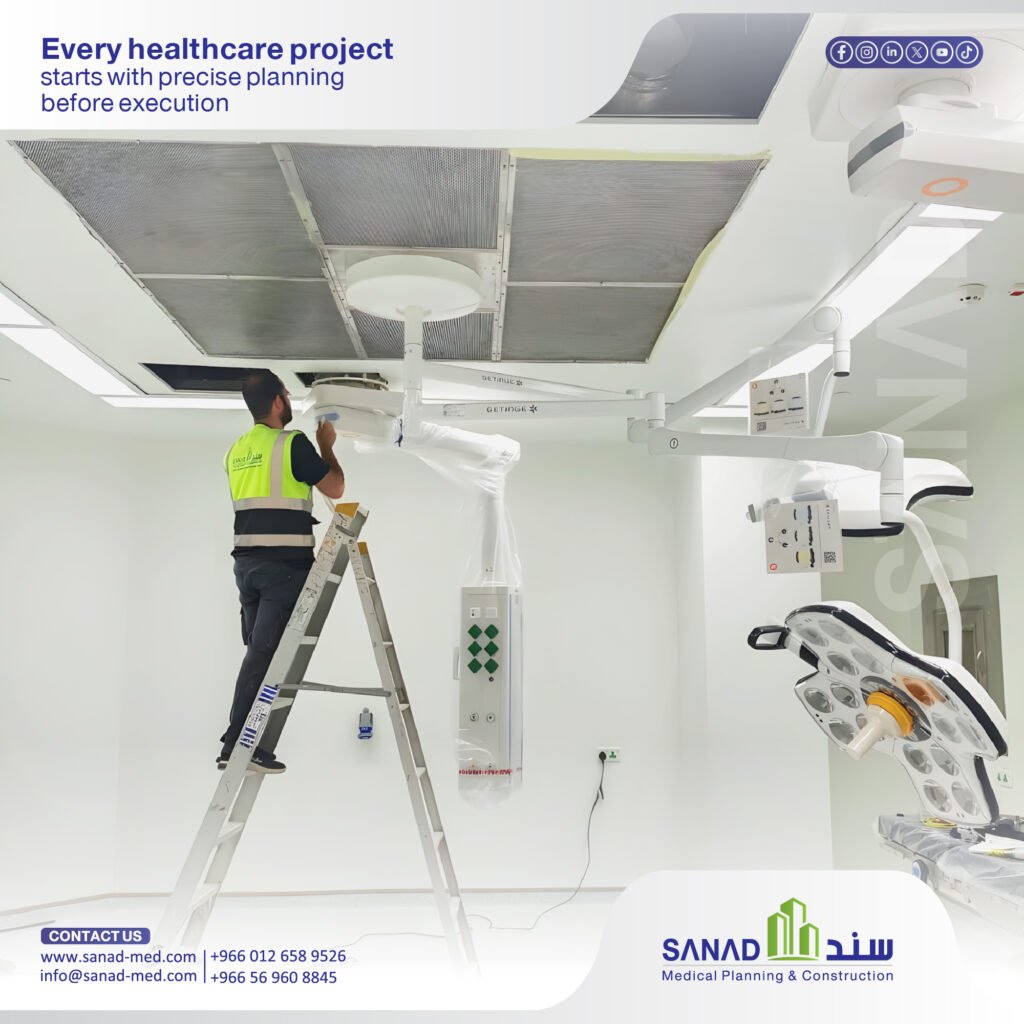
- Specialized Healthcare HVAC: Positive pressure and HEPA filtration for operating theaters, alongside negative pressure for isolation rooms.
- Isolated Electrical Systems: Dedicated distribution lines, Uninterruptible Power Supply (UPS), and emergency generators for critical areas.
- Central Medical Gas Pipelines: Precise sizing for medical-grade copper piping, zone valve boxes, and alarm panels for oxygen, air, and vacuum lines.
Third: Regulatory Approvals and Licensing
Licensing procedures run parallel to engineering design to prevent project delays:
| Regulatory Authority | Scope of Approval & Licensing |
| Ministry of Health (MOH) | Engineering blueprint approvals and final operating license via Seha platform |
| Saudi Food and Drug Authority (SFDA) | Radiation safety standards and medical device registration |
| KACST | Radiation licensing for imaging departments |
| Civil Defense & Municipality | Structural safety, fire protection, and building permits |
Fourth: On-Site Execution Sequence
Sanad Medical enforces a rigorous installation sequence to eliminate rework:
[Structural Openings] ➔ [Under-Finish MEP & Gas Networks] ➔ [Lead Shielding] ➔ [Finishes & Medical Systems]
- Structural Phase: Preparing precise wall and slab penetrations for ductwork and piping prior to concrete pouring.
- Under-Finish MEP Works: Installing concealed electrical conduits, HVAC ducts, and medical gas copper piping prior to wall closing.
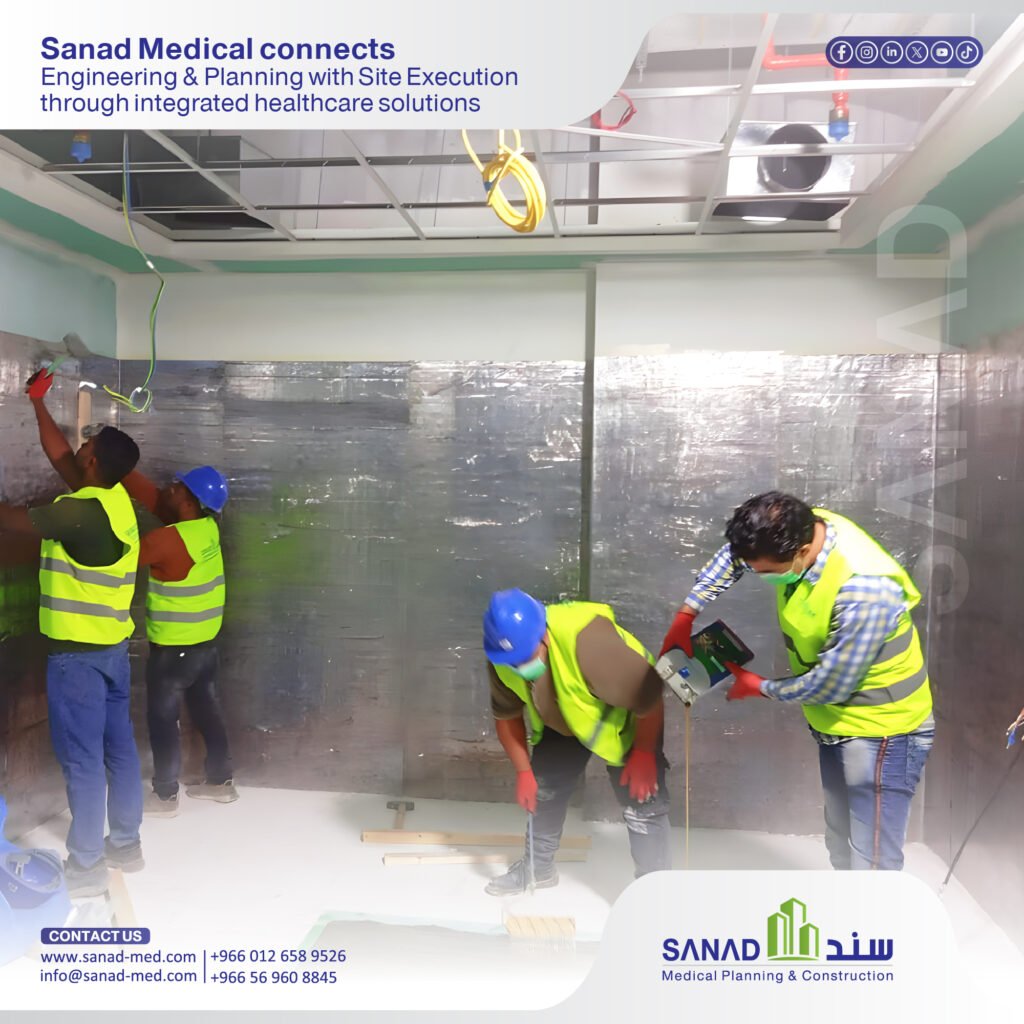
- Radiation Shielding: Installing calculated lead lining for X-ray and imaging rooms with full compliance documentation.
- Specialized Medical Finishes: Applying seamless anti-bacterial medical vinyl flooring, cleanroom ceilings, and wall cladding.
- System Installation: Mounting bedhead units, air handling units, and gas outlet panels.
Fifth: Testing and Commissioning
Prior to facility handover, all MEP and medical systems undergo rigorous commissioning tests:
- Medical Gas Pressure Testing: High-pressure nitrogen testing to verify zero leakage across pipeline joints.
- Radiation Safety Audits: Field measurement with certified devices to ensure complete radiation containment.
- HVAC Performance Validation: Verifying air exchange rates, room pressures, temperature, and humidity levels.
- Emergency Power Simulation: Testing automated generator startup and seamless UPS load transfer.
Sixth: Handover and Sustained Operations
Final delivery includes regulatory field inspections, comprehensive staff training on system operations, and long-term preventive maintenance plans to ensure ongoing compliance with CBAHI standards.
Why Partner with Sanad Medical?
Sanad Medical brings unmatched expertise to healthcare facility projects across Saudi Arabia:
- Integrated Engineering: Complete design and MEP coordination tailored for healthcare environments.
- Turnkey Execution: Certified installation of medical gas networks, operating rooms, ICU infrastructure, and specialized HVAC.
- Regulatory Alignment: End-to-end coordination with government licensing bodies for smooth commissioning.
Start Your Healthcare Project with the Right Blueprint
Ensure your medical facility meets international quality and regulatory standards from day one.
Contact the expert engineering team at Sanad Medical today to discuss your project requirements.
👉 [Contact Sanad Medical Today for a Consultation]
Frequently Asked Questions (FAQ)
- Q: What is the first step in starting a healthcare facility fit-out project?
- j: Conducting an operational needs assessment and establishing regulatory frameworks (MOH/CBAHI) prior to architectural design.
- Q: When should the licensing process begin?
- j: Concurrently with the engineering design phase, as approved blueprints are required for building and execution permits.
- Q: Why are under-finish MEP inspections crucial?
- j: Inspecting gas pipelines, wiring, and ductwork before wall closing prevents costly structural modifications post-finishing.
- Q: Is the testing and commissioning phase mandatory?
- j: Yes, commissioning is essential to ensure system integration, environmental pressure controls, and patient safety prior to opening.