
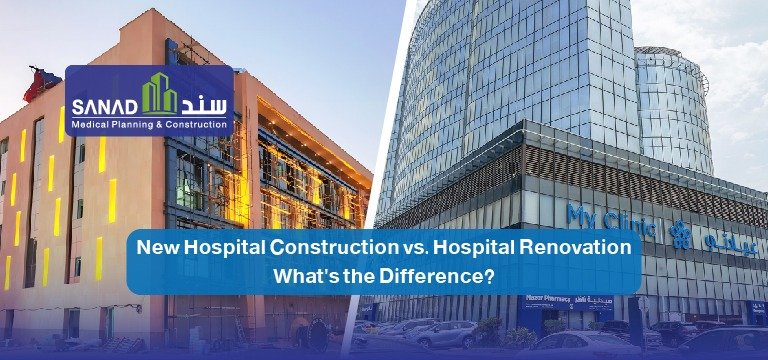
At first glance, the choice between a new hospital outfitting and renovating an operational healthcare facility might seem straightforward. In reality, it dictates two entirely different strategies across planning, engineering design, field execution, and capital budgeting. A new hospital begins with a clean slate, whereas renovating an existing facility requires navigating an operational, highly complex reality that cannot be paused. On both paths, missteps multiply costs and delay commissioning timelines.
Sanad Medical, a premier leader in healthcare facility outfitting and medical engineering in the Kingdom of Saudi Arabia, has successfully managed both pathways across numerous clinical projects — from ground-up facilities built from scratch to live clinical environments modernized without interrupting daily patient care. This comprehensive guide outlines the critical engineering and operational distinctions between both strategies to help you choose the right path for your investment.
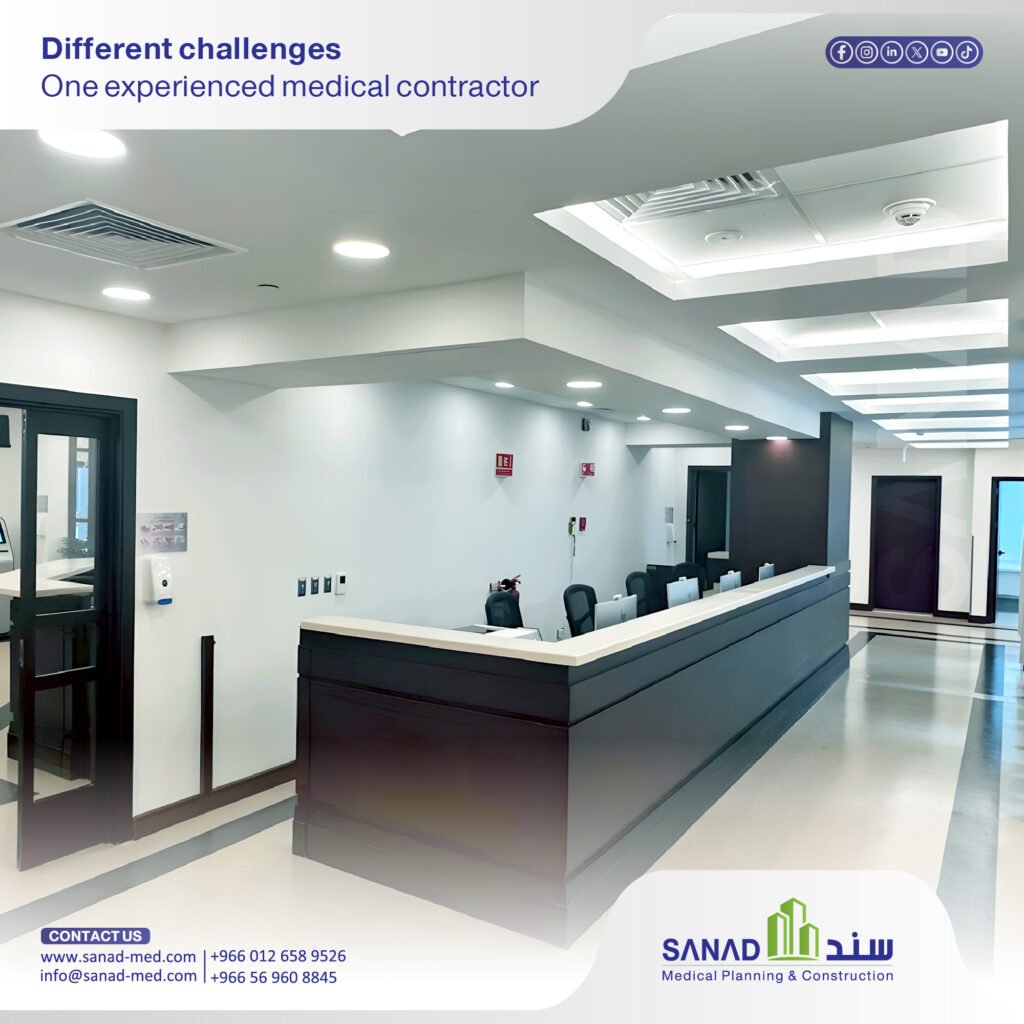
First: The Core Operational Difference
- New Hospital Construction: Offers complete design freedom. Unconstrained by pre-existing structural elements, aging utility networks, or live patient populations, the site provides a flexible canvas for optimal engineering design.
- Existing Facility Renovation: Begins with a comprehensive engineering audit of existing conditions. Evaluating what infrastructure can be retained, what systems require replacement, and how to achieve compliance with current regulatory standards — all while maintaining continuous clinical operations — defines the core challenge.
This fundamental difference shapes every phase of the project lifecycle.
Second: Comprehensive Technical Comparison
1. Architectural & MEP Engineering Design
- New hospital outfitting: Design centers purely on ideal clinical workflows — bed capacity, specialty zoning, medical staff movement, and future expansion flexibility. Free from structural constraints, engineers can optimize room orientations, departmental layouts, and infection control boundaries from day one.
- Existing Facility: Design begins with a forensic assessment of existing electrical, medical gas, plumbing, and HVAC networks — many of which may lack updated as-built documentation. Renovation engineering is the art of the possible: achieving full regulatory compliance within existing spatial footprints while minimizing structural interventions.
2. Financial Budgeting & Capital Expenditures
- New hospital outfitting: Capital expenditure forecasting offers higher precision because variables are clearly defined early in the design phase. Financial risks primarily stem from scope changes or unexpected geotechnical subsoil conditions.
- Existing Facility: Direct and indirect costs are susceptible to hidden infrastructure conditions behind walls and ceilings — such as outdated wiring requiring complete replacement, inadequate radiation shielding, or floor slabs needing structural reinforcement for heavy diagnostic equipment. A specialized engineering partner mitigates these risks through early diagnostic surveys.
| Engineering & Financial Parameters | New Facility Outfitting | Operational Facility Renovation |
| Initial Budget Estimation Accuracy | High and predictable | Moderate; subject to hidden conditions |
| Probability of Unforeseen Costs | Low under strict scope management | High; requires contingency planning |
| Cost of Maintaining Clinical Continuity | Not Applicable (Empty site) | Major cost line item in project budget |
| Demolition & System Decoupling Costs | Not Applicable | Variable based on structural scope |
3. Execution Timelines & Phasing
- New hospital outfitting: Execution follows a predictable linear sequence: architectural design, regulatory approval, civil works, specialized MEP installation, testing, and final commissioning.
- Existing Facility: Execution timelines are dictated by the operational cadence of the active hospital. High-noise works are restricted to specific windows, utility cutovers require extensive coordination, and construction must proceed in strict phases to keep adjacent clinical departments fully operational.
4. Engineering & Structural Challenges
- New hospital outfitting: Engineering challenges are predictable — integrating HVAC, medical gas pipelines, and isolated power supplies from the ground up allows for seamless system coordination.
- Existing Facility: Engineering demands creative solutions to overcome interconnected utility lines, spatial limitations, floor load capacities for heavy equipment like CT or MRI scanners, and compliance with updated regulatory standards.
5. Infection Control Risk Management (ICRA)
- New hospital outfitting: Zero clinical risk — the site is completely unpopulated, posing no biohazard threat to patients.
- Existing Facility: Infection control during construction is a paramount engineering challenge. Demolition and finishing generate dust and airborne particulates that threaten patient health. Each phase requires temporary negative pressure containment, independent airflow systems, and daily decontamination protocols approved by the clinical infection control team.
6. Regulatory Approvals & Licensing
- New hospital outfitting: Follows a standard sequential approval process with health authorities from initial architectural sign-off to final operational licensing.
- Existing Facility: Major structural or MEP alterations require updating registered blueprints with the Ministry of Health (MOH), Civil Defense, and the National Center for Radiation Protection (NRRC) to prevent compliance violations.
Third: Strategic Framework for Decision-Making
Choose New Facility Outfitting If:
- Suitable land and capital resources are available for a ground-up development.
- Your clinical operational model requires an ideal layout unconstrained by existing structures.
- The current building infrastructure has reached the end of its operational lifecycle.
- You are introducing advanced clinical specialties requiring structural parameters impossible to retrofit into an older building.
Choose Facility Renovation If:
- The core structural integrity of the existing building is sound and valuable.
- The facility occupies a strategic, irreplaceable location with an established patient base.
- Clinical continuity must be maintained to protect ongoing revenues and community healthcare access.
- The primary goal is modernizing specific clinical departments or upgrading infrastructure to achieve CBAHI accreditation.
Fourth: Universal Success Factors across Both Pathways
Regardless of the selected pathway, core engineering principles remain essential for project success:
- Early Regulatory Alignment: Securing approved engineering drawings prior to site execution to prevent costly change orders.
- Designing for CBAHI Accreditation: Building beyond minimum baseline licensing to ensure full alignment with national quality standards.
- Specialized Healthcare Engineering Partner: Engaging experienced healthcare engineering specialists who understand clinical workflows rather than relying on general civil contractors.
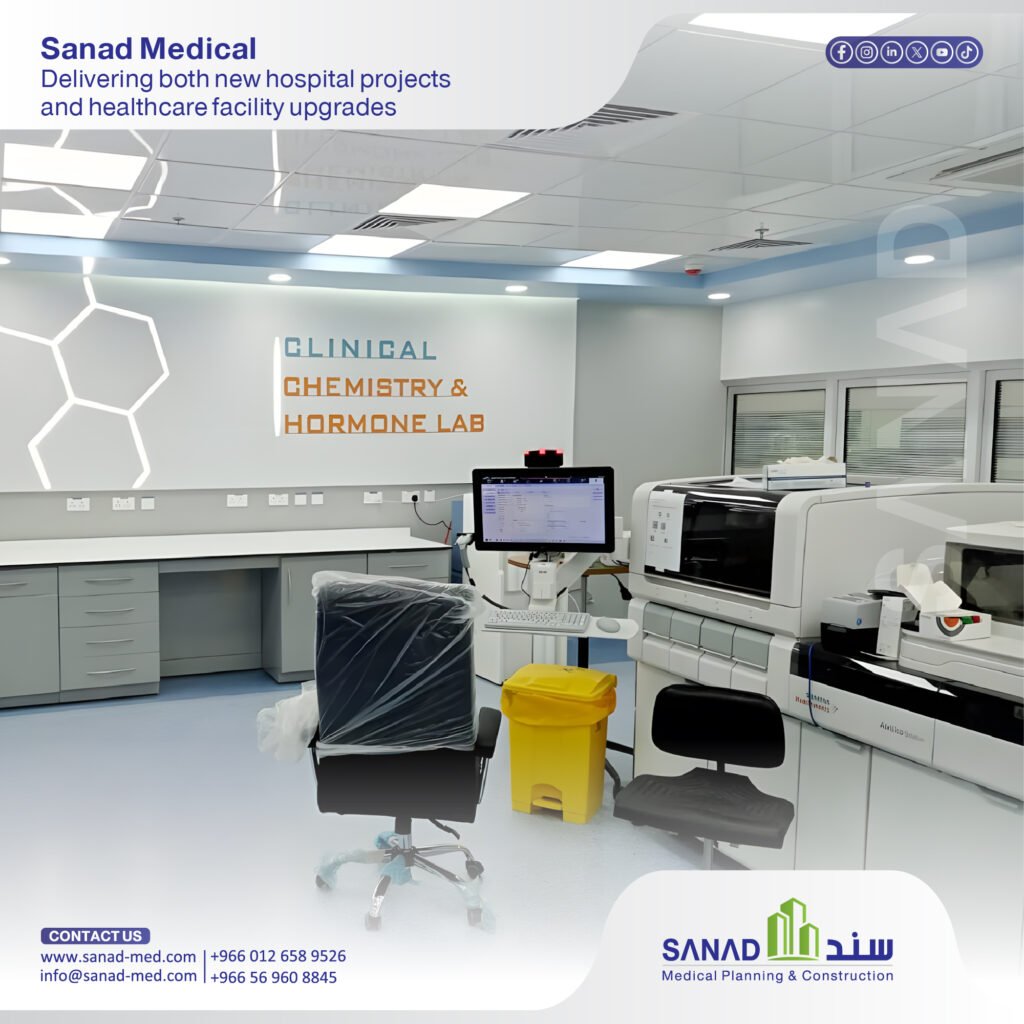
How Sanad Medical Delivers Success in Both Pathways
Sanad Medical brings proven field experience across both project types in Saudi Arabia:
- For New Facilities: Delivering complete medical engineering designs, workflow optimization, and turnkey outfitting for operating suites, ICUs, and radiology departments with specialized medical gas, HVAC, and electrical infrastructure.
- For Live Facility Renovations: Conducting thorough infrastructure diagnostic surveys, designing phased execution plans to maintain patient care, implementing strict infection control containment barriers, and managing regulatory drawing updates.
Conclusion
Determining whether to build anew or renovate an existing hospital requires a comprehensive technical assessment evaluating financial feasibility, spatial constraints, and operational continuity goals.
The engineering team at Sanad Medical provides expert facility audits to evaluate your infrastructure, define the optimal pathway, and deliver an actionable execution roadmap.
👉 [Contact the Sanad Medical Engineering Team Today to Schedule Your Technical Consultation]
Frequently Asked Questions (FAQ)
- Q: Is renovating an existing hospital always cheaper than building a new facility?
- A: Not necessarily. If aging infrastructure requires a complete replacement of medical gas networks, electrical systems, and specialized HVAC units, renovation costs can rival new construction expenses — while adding the complexity of working around live clinical operations.
- Q: What is the most effective way to prevent costly surprises during a facility renovation?
- A: Performing a thorough engineering survey and diagnostic assessment of all existing MEP networks before finalizing contracts and starting demolition works.
- Q: How is infection risk controlled when renovating an active hospital department?
- A: By erecting sealed, temporary negative-pressure containment barriers, deploying dedicated HEPA air filtration units, and establishing isolated logistics pathways for construction materials away from patient corridors.
- Q: Can an existing facility be upgraded to achieve CBAHI accreditation without a complete shutdown?
- A: Yes. By conducting a detailed gap assessment, renovation works can be executed in planned phases, systematically upgrading clinical departments and MEP infrastructure while keeping the rest of the hospital operational.